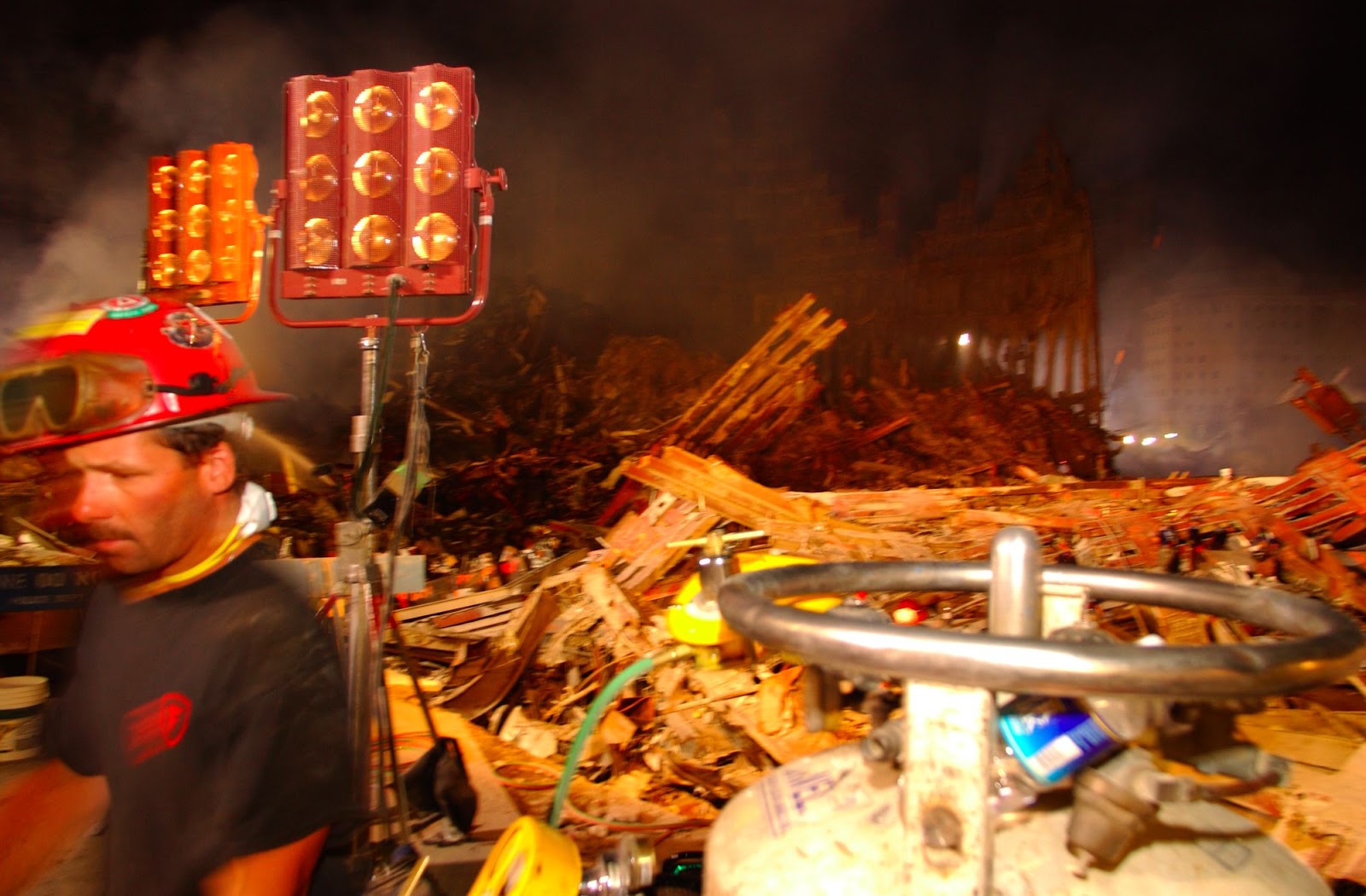
Showing posts with label 9/11. Show all posts

Saturday, September 10, 2016

Missile defense and how idolatry of the military wastes enormous amounts of public money

In my pre-blogging days, I would often makes notes on dead-tree paper. Here is a note I made on October 2, 2001, about three weeks after 9/11.

*********************
October 2, 2001

Several old ideas that seemed obsolete or were at least half-forgotten now seem to take on new relevance. Remember the "military-industrial complex"? It was a major bogeyman of the anti-Vietnam War movement and the "New Left" of those days. Some liberal economists like John Kenneth Galbraith continued to warn of the long-term dangers it presented to democracy. Even the occasional isolationist, Libertarian-oriented conservatives would grumble about it. But the idea has been largely absent from public discussion since the fall of the USSR.

No politician - with the possible exception of my Congresswoman Barbara Lee - wants to criticize the military right now. But no one can overlook the fact that on September 11, our military not only failed to protect our cities and our people from the worst sneak attack in history. What's even more scary in terms of public confidence in their ability to defend "the homeland" as we're now learning to call it is that they couldn't even defend the Pentagon, the worldwide command headquarters for our military forces, from a low-tech but devastating terrorist attack.

When I think back to earlier this year [2002] when the military faked, outright faked, the results of the Star Wars "Missile Defense" tests, it5 seems to me a classic example of the "military-industrial complex" at work, in its most corruptive, corrosive sense. If the task of defending the homeland were the top priority throughout the command structure, the military would be the first to insist that such tests be conducted honestly. They wouldn't want anyone to be wasting military dollars on a defense system that couldn't work.

But in this case, the Pentagon was more concerned to fake the results to encourage more investment in a technology they know is not yet able to do what its marketers claim. Because of they really thought the thing could work, the wouldn't have had to fake the results, now would they?

The most generous explanation I can imagine is that it was normal bureaucratic inertia. Find excuses to build up your budget. Remind everyone how critical your function is.

The more likely explanation is the unhealthy relationship between many senior military officials and private defense contractors. Not least of these incentives is the prospect of post-military-retirement jobs as officers or consultants at defense industries, despite the restrictions currently in place.

But this was the "military-industrial complex" at work. Finding excuses to spend billions on highly questionable weapons systems. While Bin Ladin's al-Qaeda group and the nation of Afghanistan prepared a successful attack on the Pentagon.

*********************

On that last point, my understanding now is that the Taliban government in Kabul not only tolerated but welcomed Al Qaeda's presence in Afghanistan. But I don't recall hearing any direct evidence that the government itself was involved in the actual planning of the 9/11 attacks.

The Star Wars boondoggle continued, of course:


David Willman has been reporting on Star Wars/missile-defense for the Los Angeles Times. Two years ago he reported $40-Billion Missile Defense System Proves Unreliable.

Just this month, he reported in A flawed missile defense system generates $2 billion in bonuses for Boeing 09/02/2016:

The interceptors failed to destroy their targets in six of the 11 tests — a record that has prompted independent experts to conclude the system cannot be relied on to foil a nuclear strike by North Korea or Iran.

Yet over that same timespan, Boeing Co., the Pentagon’s prime contractor for GMD, collected nearly $2 billion in performance bonuses for a job well-done, the Los Angeles Times has learned.

The Pentagon paid Boeing more than $21 billion total for managing the system during that period.

A Times investigation also found that the criteria for the yearly bonuses were changed at some point to de-emphasize the importance of test results that demonstrate the system’s ability to intercept and destroy incoming warheads.
And when were such changes made?

Early on, Boeing’s contract specified that bonuses would be based primarily on “hit to kill success” in flight tests. In later years, the words “hit to kill” were removed in favor of more generally phrased benchmarks, contract documents show. ...

In 2002, President George W. Bush ordered “an initial set of missile defense capabilities” to be put in place within two years.

To accelerate deployment, then-Defense Secretary Donald H. Rumsfeld exempted the missile agency from the Pentagon’s standard procurement rules and testing standards.

The Pentagon’s own Operational Test and Evaluation office has documented serious deficiencies in the system. So have other government agencies and independent experts. [my emphasis]

Nice work if you can get it! And defense contractors do get it.

We're now into the fourth decade of the major Star Wars/missile defense effort. It's main purpose was to provide a missile shield to intercept nuclear missiles. Which only works if it's extremely close to 100% reliable. The strategic idea behind it was always dubious, to put it mildly, even if it had that level of reliability. Which it's never come close to having.

But who cares about that if it's generating not only billions of dollars in profit to companies that fail decade after decade to make the thing work?

Sunday, July 17, 2016

Saudi Arabia and 9/11: the "28 Pages"

The "28 pages" on Saudi Arabia from the 9/11 Commission report just released on Friday make interesting reading!

Although the released document that can be found here actually constitutes 29 pages plus a cover page, with the transmittal letter for this release included.

A character named Osarna Bassnan was a Saudi national who had worked for the Saudi Arabian Education Ministry and an "FBI asset" reported that Bassnan told him he had aided the 9/11 hijackers. The fact that Bassnan, uh, lived across the street in San Diego from two of the hijackers (Nawaf al-Hazmi and Khalid al-Mihdhar) could have it convenient to do.

The twenty-nine "28 pages" also say, that Bassnan and his wife "have received financial support from the Saudi Ambassador to thye United States and his wife." That Ambassador was Bandar bin Sultan, who was so close to the Bush family they nicknamed him "Bandar Bush." Bandar Bush is now head of Saudi intelligence.

Charlie Pierce comments in What We Know from the 28 Pages Esquire Politics Blog 07/15/2016.

Murtaza Hussain comments on them in Saudi Ties to 9/11 Detailed in Documents Suppressed Since 2002 The Intercept 07/15/2016:

One of the most notable figures mentioned is Omar al-Bayoumi, alleged by the report to have likely been a Saudi intelligence agent. Al-Bayoumi was in close contact with hijackers Nawaf al-Hazmi and Khalid al-Midhar, providing them financial assistance during their time in the United States and even helping them find an apartment. Bayoumi in turn is believed to have been on the payroll of the Saudi Ministry of Defense and was regularly in receipt of large lump sums of money from the Saudi Ministry of Finance and other undisclosed arms of the government.

Another figure highlighted in the documents is Osama Bassnan, a Saudi citizen who was an associate of al-Bayoumi and lived in an apartment nearby al-Hazmi and al-Midhar. According to the report, Bassnan “made a comment to an FBI source after the attacks suggesting that he did more for the hijackers than al-Bayoumi did.” Bassnan and his wife received regular payments from the wife of Bandar bin Sultan. On one occasion, Bassnan is said to have received a check directly from Bandar’s account.

Fahd al-Thumairy, a former Saudi consular officer in the United States who served as an imam at a mosque attended by al-Hazmi and al-Midhar, is also mentioned briefly, as is Saleh al-Hussayen, who is described in the report as a “Saudi Interior Ministry employee/official.” Al-Hussayen stayed at the same hotel as one of the hijackers in the days before the attack. While being interviewed by FBI agents after the attacks, al-Hussayen “either passed out or feigned a seizure,” causing the interview to be terminated. He later managed to successfully flee the country.
Marcy Wheeler blogs on it in FBI Established Saudi Task Force Just before Joint Inquiry Release Emptywheel 07/15/2016: "The pages are actually more damning than I expected. It lays out many damning details we already knew of: including that Bandar bin Sultan’s wife was providing money to one of the suspect Saudi intelligence people, several Saudi apparent agents provided support for the hijackers, and an apparent dry run for the attack was conducted by someone paid by the Saudis."

Sunday, February 14, 2016

The Saturday night Republican horror show: "it was a mess"

Last night, the Republicans had another debate, this one in Greenville, South Carolina. The Young Turks summarize in CBS Republican Debate: The Young Turks Summary 02/13/2016


Cynthia Roldan reports in GOP debate in Greenville gets heated Charleston Post and Courier 02/14/2016:

While discussing America’s war policies, Trump lashed out at former President George W. Bush’s decision to launch the Iraq War, accusing the former administration of lying by claiming that there were weapons of mass destruction when there were none.

Trump even jabbed at claims the earlier Bush White House kept America secure.

“The World Trade Center came down during the reign of George Bush. He kept us safe?” Trump said, going on to say “I lost hundreds of friends” in the 9/11 terror attack.

Trump even doubled down on his attack on Jeb Bush, the current GOP candidate, criticizing him for initially struggling to disagree publicly with his brother’s decision to go to war in Iraq.

“It took him five days before his people told him what to say, and he ultimately said it was a mistake,” Trump said of Bush.

Bush, who was openly frustrated with Trump’s attacks, said he didn’t mind being singled out but that he was “sick and tired of him going after my family.”

“While Donald Trump was building a reality TV show, my brother was building a security apparatus to keep us safe,” Jeb Bush said. “And I’m proud of what he did.”
A President Trump's foreign policy would be at least as misguided as Shrub Bush's and Dick Cheney's. It would be quite a feat to have one more disastrous.

But I am glad Trump tossed that point out there. The Democrats should have been doing it from September of 2001. The Young Turks refer to that moment in Trump's performance, CBS News Republican Debate: The Biggest Winner Was... 02/13/2016:


D.D. Guttenplan reviews the debate in Trump Says This Was His Best Debate Yet. He Might Be Right. The Nation 02/14/2016:

The Republican Party’s continuing failure to come up with a consensus alternative to the Greatest Shill on Earth hasn’t just made Trump the prohibitive favorite in the South Carolina primary on February 20. It has also given a television audience who wouldn’t believe Bernie Sanders if he told them the earth rotates around the sun repeated exposure to the notion that the Republican party is the tool of “lobbyists and special interests,” Jeb Bush is their creature, George W. Bush “lied us into war in Iraq,” Ted Cruz is an even bigger liar, while corporate America has stashed “$2.5 trillion offshore.” And by the way, Planned Parenthood does “wonderful things having to do with women’s health.”

Meanwhile, Rubio also announced that “Ted Cruz has been telling lies,” Cruz called Rubio a lackey of “the donor class,” John Kasich pointed out Jeb Bush’s ruinous economic legacy in Florida, while Bush denied he ever threatened to “moon” anyone.
Trump is a rightwing demagogue. The occasional shot he takes that are things progressives might agree with on their face are not things he takes particularly serious. His fans are turned on by his White Power appeals: cheering cops who murder unarmed black people for no good reason, demanding the deportation of 12 million Latinos, promising to bully Mexico and bomb the crap out of this or that Arab country.

Tuesday, September 11, 2012

9/11 anniversary 2012

Austria's Social Democratic Party (SPÖ) posted this image of an election poster, presumably from 1945 just after Austria's liberation from Germany, on their Facebook page today. It's titled "11 Years of Fascism" with images of Adolf Hitler and the famous damaged facade of the Karl-Marx Haus of workers' residences that was damaged in the short but bitter Austria "civil war" of 1934 under the "corporate state" (Standestaat) dictatorship of Engelbert Dolfuss (1892-1934).


I doubt that they intended it to be any kind of comment on what has happened to civil liberties and respect for international law in the United States during the last 11 years. And "9/11! 9/11! 9/11!" has been the justification used for it.

It's worth remembering that basically one change in airline policy would have prevented the 9/11 attacks from going down as they did: reinforcing the doors to the pilot's cabin and changing the practice of having the pilots negotiate face-to-face with hijackers.

Obviously, any reasonable response to the 9/11 attacks would have strengthened other security measures, as well, such as the pre-boarding passenger screening.

But we got way more than that. We got a full-blown resumption of the Cold War with two hot wars (Afghanistan and Iraq) with the one in Afghanistan still going. Only this time The Enemy was a nuclear-armed super-power like the Soviet Union but a small band of terrorist that almost certainly no longer exist in anything like the form they did eleven years ago.

It appears that the major progress against the actual Al Qa'ida group of Osama bin Laden was in the early weeks of fighting in Afghanistan, when they were heavily concentrated in Afghanistan and were engaging in conventional battles against the US-backed and largely US-directed Northern Alliance supported by US airpower. If the Cheney-Bush Administration and its Defense Secretary Rummy (Donald Rumsfeld) had been more serious about getting Bin Laden, they might well have gotten him in the battle of Tora Bora in early 2002. Or at a minimum they could have wiped out virtually all his remaining well-trained cadres there.

Now, in addition to "Al Qa'ida" being the chief Enemy for our massive US military establishment and the industries that supply it at a healthy profit, we have a full-blown counter-terrorism industry with big bucks riding on continued public fear, rational or otherwise, of the present-day bogeyman called "Al Qa'ida". Because of the extreme levels of government secrecy under Cheney and Bush, intensified under the Obama Administration, it's virtually impossible for journalists or the general public to have a very good evaluation of the real threat from terrorism. But it's hard to imagine from what we do know that whatever terrorists groups are out there, even ones that have adopted the name "Al Qa'ida" in tribute to the original, that the actual organization that Bin Laden headed on 9/11/2001 continues to exist in any meaningful form.

And they weren't super-spies when they did exist. The 9/11 operation reportedly cost something like $250,000 altogether. They mainly exploited lax security procedures by the airlines, who then ran the pre-boarding passenger screening, and the indifference of the leaders of the Cheney-Bush Administration prior to eleven years ago today. Speaking of indifference, the New York Times just provided us more details of how little they cared about the actual threat of Al Qa'ida in 2001 prior to September 11: Kurt Eichenwald, The Deafness Before the Storm 09/10/2012.

In any case the Obama Administration continues to flog the threat of "Al Qa'ida". Bin Laden's much-celebrated death didn't diminish that. As of today, the federal National Counterintelligence Center's (NCTC) page defining Al Qa'ida reads:

Despite leadership losses, al-Qa‘ida remains committed to conducting attacks in the United States and against American interests abroad. The group has advanced several unsuccessful Western plots in the past two years, including against the United States and Europe. This highlights al-Qa‘ida’s ability to continue some attack preparations while under sustained counterterrorism pressure and suggests it may be plotting additional attacks against the United States at home or overseas.
Daphne Eviatar of Human Rights First has the right idea in 11 Years After 9/11, It's Time to End the War on Terror 09/11/2012:

But fixing the real problem isn't how things happen in politics. So instead of just improving intelligence and communications among government agencies and going after the people who attacked us, the U.S. government embarked on two ill-defined wars, created a massive new "Homeland Security" bureaucracy, doubled the defense budget (not counting the cost of the wars), and created overseas prisons and military commissions to avoid the basic requirements of the United States Constitution.

Some detainees were tortured in those prisons; the U.S. government is still covering it up today.

Much of that response to the 9/11 attacks wasn't only unnecessary, it was downright destructive.
She also points to the practically open sham that is the headline for the ongoing "war on terror": "Although U.S. officials have acknowledged that the al Qaeda that attacked us on 9/11 has been all but defeated, the government has ramped up the war against far-flung al Qaeda affiliates, some of which didn't even exist in 2001." Her conclusion:

Eleven years later, it's time to turn things around. Instead of generating more enemies and motivating more attacks, we should be doing the opposite. Sure, keep using intelligence and law enforcement and diplomacy and development and all the many tools the U.S. government has to track, prosecute, punish and thwart terrorism.

But spending trillions on secret wars, secret trials, offshore prisons and forever prisoners? There's no future in that.
Sounds right to me.

Tags: , , ,

Wednesday, September 21, 2011

Colin Powell defends the Iraq War

Aljazeera English has posted an interview it did with Former US Secretary of State Colin Powell as part of its 9/11 tenth anniversary coverage. He's very defensive about the role he played in starting the Iraq War and defends the war itself.


The two brief articles accompanying the video, Colin Powell regrets Iraq war intelligence 09/11/2011 (which features a somewhat shorter version of the Powell interview) Talk to Al Jazeera: Colin Powell 09/19/2011, doesn't convey the extent to which Powell's responses are defensive of his and the Cheney-Bush Administration's actions in the Iraq War.

Here are a few high points to listen for.

7:30 Al Qa'ida not still a significant threat (my version of the implication of what he says)

9:00 How to measure Al Qa'ida's capabilities

13:00 "Imagine how I felt ..." This is the whiniest part of the interview

15:00 The Democrats were wrong about Iraq's WMDs, too!

16:00 The chaos, killing and destruction in Iraq were "caused by an insurgency," not by the Anglo-American invasion

17:00 The Iraqis would have adored us if we had just gone in with a larger force

24:00 Takes on the "why do they hate us" question; mentions foreign policy grievances, but fall back on the Bush they-hate-us-for-our-values meme

24:40 Refuses to say what he thinks about secret US prisons ("black sites")

Tags: , ,

Monday, September 19, 2011

September 11 retrospective: The Dissent symposium (2 of 2)

More from Dissent's Symposium: Ten Years Later on the 9/11 attacks and their effects.

Nicolaus Mills writes on Ten Years Later: The 9/11 Photo That Changed America 09/08/2011. The photo he means is this one, known as "The Falling Man” by Richard Drew:


Michael Kazin, Ten Years Later: The Right Since 9/11 09/08/2011

Since the 2008 election, prominent conservatives, both in and out of office, have made their alternative to “the political establishment” alarmingly explicit. They now take views on nearly every domestic issue that, by definition, are profoundly reactionary. Glenn Beck declares he “hates” Woodrow Wilson for initiating the Federal Reserve system, while Rick Perry calls Social Security a failure and a “Ponzi scheme” and would like to abolish the income tax. Both Perry and Michele Bachmann proudly declare their wish that all Americans convert to their sort of triumphal Christianity. Before 2001, most conservatives hoped to roll back certain parts of the Great Society—although not Medicare or the Civil Rights Act. Now, an increasing number would like to repeal nearly everything government has accomplished, with popular support, during the entire twentieth century. The GOP majority in the House of Representatives seems eager to begin that mighty task.

The hypocritical Right has thus been succeeded by a hysterical Right. There is no room in this vitriolic camp for such thoughtful Bushian conservatives as David Frum and Michael Gerson, much less Sam Tanenhaus, an admiring biographer of Whittaker Chambers and William F. Buckley. David Brooks, who once said his task as a columnist for the New York Times was “to explain Red America to Blue America,” seems entirely disgusted by national politics and has taken refuge in neuropsychology.
Feisal Mohamed, Ten Years Later: Elegy, Memorial, and Mourning 09/08/2011:

In her recent reflections on 9/11, Former Director General of MI5 Eliza Manningham-Buller remarked that “terrorism is resolved through politics and economics, not through arms and intelligence”; that it is fundamentally unhelpful to declare war on terror, which will always exist in some form; and that the attacks were a crime and need to be thought of as such. On which anniversary of the attacks will these obvious truths be widely acknowledged?
This is one of those don’t-associate-me-with-those-bad-leftist pieces: Bhaskar Sunkara, Ten Years Later: The History of Possibility 09/08/2011. He makes an interesting juxtaposition between the anti-globalization protests in Seattle in late 1999 and Muslim terrorism-related event:

A common sentiment among those who took part in the movement is that of a historical moment cut short. The Islamist attacks on the World Trade Center and Pentagon fostered a domestic environment that allowed American troops to be deployed to Afghanistan and Iraq. The “anti-globalization” movement receded from view, but before long street protests returned. The build-up to the Second Gulf War saw history’s largest demonstrations. But now the Left was on the defensive. “Anti-imperialist” rhetoric was resurrected, Students for a Democratic Society was reborn, but the anti-war movement proved no more able to stop war than the “anti-globalization” movement was able to end capitalism. ...

There were signs, even then, that the future would not be kind to the Left. In December 1999, while broken storefront windows were still being swept up in parts of Seattle, Ahmed Ressam was arrested around eighty miles west of the city. He was found with an impressive cache of explosives, weapons he loaded into the trunk of a rental car and planned to use to bomb Los Angeles International Airport. At the dawn of the millennium, some socialists looked forward to the resurgence of the Left, but this may have always been reaction’s moment.
This seems an odd sentiment for the editor of an online journal called Jacobin. But that’s material for other articles.

What I’ll say here is that it comes off as an oddly cynical reading of the real shifts in American politics in the 2000s. However much a disappointment the Obama Administration has been to partisan Democrats, the political developments that took place from the October 2002 authorization for war on Iraq, one of the historic low points in our political system’s history, to the election of Barack Obama as President in 2008, the public gave expression to a real democratic resistance against the policies of the Cheney-Bush Administration. That isn’t changed by the fact that Obama has governed in a far more conservative manner than his campaign presented him.

Did those developments constitute a “resurgence of the Left” in Sunkara’s sense? If we define “the Left” as rioting anarchists, which seems to be his sense of it, then no, it didn’t. But in the sense the term is commonly conceived in US politics, it did. It’s hard to see how he can conclude from those developments that “this may have always been reaction’s moment.”

James B. Rule in Ten Years Later: Bringing out the Worst 09/08/2011, does what the title implies. He summarizes the dark side of the US response to 9/11:

To the consternation of liberals and civil libertarians, the Obama administration has extended many of these policies—“extraordinary renditions” of prisoners for torture abroad included. But perhaps even more disturbing than America’s out-sourcing of torture are the legal doctrines now stoutly defended by the Obama administration for concealing the true extent of the new authoritarianism of the American state.
Dissent's online editor Nick Serpe takes up some of the same theme in Ten Years Later: The War at Home 09/08/2011:

The ideals of open government, of a public and legislative approach to security and to war, and of the unjust persecution of even a small number as the persecution of us all, can only spur so many. For a brief time, when he took office, Obama appeared to be one with these ideals: he abolished official torture and closed CIA prisons abroad. But he quickly gave up on shutting down Guantánamo and has embraced the permanent suspension of habeas corpus, an official policy of assassination, and the continued use of extraordinary rendition.

The national security state, grown alongside our wars declared and not, is not an election issue. A Beltway consensus has emerged in favor of preserving its new tricks, and there’s no doubt that a new Republican president would have fewer scruples about legality than the current president does.
Sarah Leonard in Ten Years Later: Self-Surveillance and Social Media 09/08/2011 discusses the mass surveillance that Cheney-Bush Administration implemented after 9/11.

And Greg Smithsimon in Ten Years Later: City of Comrades gives his take on the immediate collective New York City response to the attacks.

Tags: , ,

Friday, September 16, 2011

September 11 retrospective: The Dissent symposium (1 of 2)

Dissent has a set of online posts dated 09/08/2011 called, Symposium: Ten Years Later on the 9/11 attacks and their effects.

Dissent is a magazine that began as consciously social-democratic. Which means their domestic policy perspective tended to be on the left of the Democratic Party or even outside what would be considered respectable Democratic Party opinion. But they were also pro-Cold War and anti-Communist. And that combination during the Cold War often meant in practice that they were tempted to go the extra mile to show that they were reliably anti-Communist and suspicious of any kind of activism that may have carried a “Communist” taint in the eyes of good Cold War liberals.

It was an annoying habit during the Cold War and even more annoying now. A couple of the articles linked below have a residue of that tone. You can see self-descriptions of Dissent’s self-understanding in Mitchell Cohen, Decades of Dissent Dissent Winter 2004 and in this excerpt from their first issue, in the peak year of McCarthyism, 1954.

It sometimes hard to distinguish this don’t-associate-me-with-those-bad-leftist perspective from neoconservatism. The latter’s intellectual perspective evolved from 1930s American Trotskyism, particularly a brand popular among some intellectuals around the New School for Social Research, where their intellectual godfather Leo Strauss was a prominent figure. In its still liberal-left variant, this outlook often comes off as liberal “concern troll” pleading, i.e., scolding those bad libruls or “the Left” for not endorsing this or that Republican position.

Mitchell Cohen, a longtime co-editor of Dissent, gives us an example of that in Ten Years Later: What Should the Left Have Learned? 09/08/2011. Apparently he thinks that a decade after the 9/11 attacks, the main thing “the left” should have learned is that it was a great idea to invade Iraq:

Reducing all politics to “imperialism versus anti-imperialism,” is the gag of Gog and Magog.
Gog and Magog are prominent players in fundamentalist theories of the End of the World. But what he means by the gag of Gog and Magog, I don’t know.
But his piece is devoted to scolding an ill-defined Left for their supposed devotion to the notion of imperialism. But it was the neocons in the post-9/11 period that finally made the concept of “imperialism” respectable in discussing American foreign policy. They typically discussed the US as (an of course benevolent) empire and argued that it should use its power in a self-consciously imperialist manner. Whether that was based more on the residues of Trotskyism or their admiration for their own image of Winston Churchill and the British Empire would be hard to determine. But in a piece that scornfully scolds the Left (whoever he thinks that is) for talking about imperialism, you would think the neocons deserve at least a share of that scolding in passing! (The neocons have been very widely discussed, e.g., Robert Dreyfuss, Just the Beginning The American Prospect 04/01/2003; Andrew Bacevich, New Boys in Town: The Neocon Revolution and American Militarism TomDispatch.com 04/22/2005; Jim Lobe and Michael Flynn, The Rise and Decline of the Neoconservatives Right Web 11/16/2006.)

Other than having his head stuck in Cold War-era polemics, Cohen’s view of 9/11 and the Iraq War it was used to justify doesn’t vary from the neocons’ in any way that’s internally evident:

Things don’t—history doesn’t—work so simply. The United States, in response to the attacks of September 11, launched and botched an invasion of Iraq, in part with spurious rationales. Yet one day researchers may reach interesting conclusions about the long-term impact on the Arab world of TV images that showed a disheveled, once swaggering dictator crawl out of a hole. Stable democracy will probably not be the long-term result of the recent Arab upheavals or of the American misadventure in Iraq, but the fate of Baghdad's strong man certainly showed that his like is not invincible. Bin Laden's version of jihad and his organization suffered severe setbacks in the year leading to the anniversary of September 11. These were due both to U.S. forces — most important, the killing of bin Laden — and the fact that al Qaeda had no role in the dramatic changes in the Middle East. But these do not preclude a region in which a different kind of extremism, that of the Muslim Brotherhood, functions as superego. And one person’s religious fanaticism is also not another person’s democracy. [my emphasis]
The rationales for the invasion of Iraq were Saddam’s nonexistent "weapons of mass destruction" and his nonexistent ties to Al Qa'ida and specifically to the 9/11 attacks. They weren’t spurious "in part." They were entirely false. Cohen’s triumphalist treasuring of the image of Saddam’s capture clearly pleases him. And, with our sports-event coverage of war, no doubt it please most Americans. But if we’re going to consider the supposed value of that image as a justification for the Iraq War, we have to take into account the many other iconic images of that war and the realities they depict: the prisoners being tortured at Abu Ghuraib; the city of Fallujah flattened; the civilian dead from American raids; the disgraceful propaganda sideshow around the rescue of Jessica Lynch.

Whatever discrediting value the capture footage may have had on Saddam’s image, which wasn’t very good in the Arab world to begin with, whatever “interesting conclusions” those future researchers may draw from it, there were also the images of: Saddam being displayed for the cameras having a medical examination, a violation of laws of war against displaying prisoners as trophies; Saddam in court, defending himself in what amounted to a kangaroo court proceeding; Saddam maintaining a dignified posture at his own hanging, while his executions screamed insults with him, not bothering to treat his death as anything other than a revenge killing.

For that matter, at least some viewers must have taken the footage of Saddam’s capture not only as evidence of his final defeat, but also as evidence that he was willing to get out in the dirt literally as a resistance fighter, though he was likely more of a fugitive than a fighter then. Superficial triumphalist rhetoric leads to sloppy and arrogant thinking on foreign policy.

Finally, Cohen’s comments on Al Qa’ida are strange. If we define Al Qa’ida as Osama bin Laden’s original organization, it doesn’t seem to me from what I’ve read and heard on them that they had more than a marginal existence in the last year. And was Bin Laden’s death especially significant? In imagery, yes. In substantive effect on the real existing terrorist problem? Or on the United States' understanding of its foreign policy? Or on the Pentagon's and the domestic national security establishments' estimations of their budgetary needs? The answer seems to be no for all three.

Tags: , ,

Monday, September 12, 2011

Covert operations and the mystique of 9/11

One of the things I learned from the recent reflections on the 9/11 attacks, both those of others and writing my own, is what a large role 9/11 plays as a reference point in our political discourse. And because that is the case the meaning of "9/11" in American political life cannot be separated from the practical applications of the official and unofficial understandings of 9/11. Including the Afghanistan and Iraq Wars and the state of permanent war in which we effectively entered with the invasion of Afghanistan.


Columnist David Ignatius, an enthusiastic cheerleader for invading Iraq, writes in The covert commander in chief Washington Post 09/08/2011, a puff piece for the White House, praises President Obama as our James Bond-in-chief which plays heavily on "9/11" themes like the killing of Osama bin Laden:

Obama is the commander in chief as covert operator. The flag-waving "mission accomplished" speeches of his predecessor aren't Obama's thing; even his public reaction to the death of bin Laden was relatively subdued. Watching Obama, the reticent, elusive man whose dual identity is chronicled in "Dreams From My Father," you can't help wondering if he has an affinity for the secret world. He is opaque, sometimes maddeningly so, in the way of an intelligence agent.

Intelligence is certainly an area where the president appears confident and bold. James Clapper, the director of national intelligence who has been running spy agencies for more than 20 years, regards Obama as "a phenomenal user and understander of intelligence." When Clapper briefs the president each morning, he brings along extra material to feed the president's hunger for information.
The President wrapping himself in his role of Protector Of The Nation is nothing new. They all do it to some extent, and understandably so.

But the sprawling scope of intelligence and other activities on "the dark side," as Dick Cheney called it, is toxic to democracy and to a great extent to sound foreign policy as well. Most of those activities can be presented in the romantic mystique of Ignatius' column on when kept secret. That's especially true of "black ops." One of the most striking things about James Prados' excellent history of the CIA's covert operations - a distinct function from intelligence gathering and analysis - Safe for Democracy: The Secret Wars of the CIA (2006), is how inept and dumbly risky even some of the greatest CIA covert-ops success story actually were, like the coups in Iran and Guatemala in early the 1950s. If columnists like Ignatius were actually researching and reporting on some of the current dubious activities of that sort instead of comparing the President to John Le Carré's fictional hero George Smiley, they would be doing the country a much greater service.

Tags: , ,

Sunday, September 11, 2011

September 11 retrospective: "Jueves" de La Oreja de Van Gogh

When I think of the song that most speaks to me in terms of remembering the 9/11 attacks and the terrible losses there, this is the one that comes to mind. It's actually a remembrance of a similar event in Spain, the March 11, 2004 terrorist attack on the Madrid subway. To me, it strikes just the right tone of sadness and tragedy but at the same time manages to be affirming of life and hope.


Tags: , ,

September 11 retrospective: From the Twin Towers to Baghdad (2 of 2)

In my previous post on this topic, I discussed how the concept of terrorism as state-sponsored terrorism combined with American triumphalism to enable Dick Cheney and the Cheney-Bush Administration to embark on the disastrous course of preventive war in Iraq.

I quoted Daniel Benjamin and Steven Simon in The Age of Sacred Terror (2002) on how the post-Cold War belief among the US public that the country "had never been more secure" because "the world had not seen such a dominant power since ancient Rome." That belief not only contributed to the shock of the 9/11 attacks. It also set the stage for a wild overestimation of the ability of the United States to conquer and remake countries like Afghanistan and Iraq.


As Ivo Daalder and James Lindsay explain in America Unbound: The Bush Revolution in Foreign Policy (2003), even prior to the 9/11 attacks, George Bush and his foreign policy teams thought of foreign policy in "hegemonist" terms. They describe the particular variant of hegemonist thinking that dominated the Administration as including the following tenets:

  • "The United States lives in a dangerous world" that operates in a Hobbesian fashion; in practice this meant threat inflation, exaggeraing the dangers represented by nation-states like Russia and China.
  • "[S]elf-interested states are the key actors in world politics." This fit comfortably with the idea of terrorism as a problem of state-sponsored terrorism. "The assumption was that terrorists were the creatures of states, and they would wither without state support."
  • They saw military power as the "coin of the realm in a globalized world," i.e., they had a militarized approach to foreign policy. And a unilateralist one, as well. They believed that "if America leads, others will follow," as Daalder and Lindsay put it.
  • They scorned multilateral arrangements: "multilateral agreements and institutions are neither essential nor necessarily conducive to American interests."
  • They operated on the assumption of American exceptionalism: "the United States is a unique great power and others see it as such. ... What Washington wanted was what everyone wanted," as Daalder and Lindsay summarize that view on the Bush team's part.
Daalder and Lindsay:

[C]ritics argued that the Bush strategy suffered from considerable conceptual confusion, which had real policy consequences. Most important, it conflated the notion of preemptive and preventive war. Preemptive wars are initiated when another country is clearly about to attack. Israel's decision to go to war in June 1967 against its Arab neighbors is the classic example.

Preventive wars are launched by states against others before the state being attacked poses a real or imminent threat. "What made war inevitable," the ancient Greek historian Thucydides wrote about the Peloponnesian War, "was the growth in Athenian power and the fear this caused in Sparta." The purpose of initiating war in these circumstances is therefore to stop a threat before it can arise. Israel's strike against Iraq's Osirak reactor in 1981 was one example of preventive war. Cheney's argument that Iraq needed to be struck before it acquired nuclear weapons was another. Much of the Bush rhetoric - including the justification for the Iraq War - was consistent with the notion of preventive war, not preemption. Yet, while preemptive wars have had a long-recognized standing in international law as a legitimate form of self-defense, preventive wars did not. Not surprisingly, a resort to preventive war in the case of Iraq would prove highly controversial.
The 9/11 attacks created the conditions in which the Cheney-Bush Administration could take those concepts to the destructive conclusions they did. How much of that the religious fanatic Osama bin Laden had hoped to produce, it's a reality that the United States has in the last 10 years has done far more damage to our international standing and destruction that Bin Laden had any rational expectation of doing. In that way, Dick Cheney and Osama bin Laden were the perfect partners for one another.

Tags: ,

Saturday, September 10, 2011

September 11 retrospective: Shields and Brooks find something meaningful to say about 9/11

I'll forgo my usual introductory carping about the conventionality of Sleepy Mark Shields and David "Bobo" Brooks. It's still there in their 09/09/2011 PBS Newshour appearance, Shields, Brooks on Obama's Jobs Speech, Perry's Debate Debut. Okay, I'll carp a bit. Sleep Mark doesn't seem to have noticed that President Obama has proposed cutting Social Security and Medicare benefits earlier this year, proposed cutting Medicare again in his Thursday jobs speech and is floating benefit cuts for Social Security again. But I was struck by their comments on the 9/11 anniversary.


Bobo surprised me again this week by saying something I wonder if he really intended to say:

I would just emphasize some of the positive things that have happened since 9/11 because of U.S. actions. Saddam is out. Gadhafi is out, not all because of U.S. actions. Taliban is out. Mubarak is out. There has been a change in the world. Al-Qaida has been destroyed. We haven't been attacked again. And so I would say it's at least a mixed blessing and that, after 9/11, the Middle East is in a period of turmoil, could turn out bad, could turn out good. [my emphasis]
Say what? "Al-Qaida has been destroyed." Say what?!? The massive terrible Terrorist Menace that we have to spend half the military budgets of the world to fight doesn't exist anymore? He's right, of course. There's little if anything left of Bin Laden original Al Qa'ida group, at least from what we can tell from the confused and often deeply self-interested news we get on the subject.

Shields has always been decent on the Iraq War, even as most of his political analysis has slid into mind-numbing conventional wisdom, albeit with a consistent Democratic Establishment twist. He challenged Bobo's otherwise bland Profound Reflection on 9/11 this way:

I think that to use 9/11 as a justification for going to war against Saddam Hussein is indefensible. It was indefensible then is indefensible against -- war on Iraq and a war of occupation. The United States now has two wars of occupation 10 years later.

I think Afghanistan, you could certainly make the case, after the attack of 9/11, that that was necessary and required. There was a sense of national unity and solidarity and compassion that existed in this country after 9/11, which is gone. It's no longer, no longer with us.

The United States' standing in the world, that sense of solidarity with the United States and support for the United States after the terrible events of 9/11 has been allowed to go away. I agree with David about the Arab spring. And I think it is encouraging, and I -- but I don't think that going to Iraq is an instrument of it.
Tags: , , ,

September 11 retrospective: National unity of fear


We hear invocations periodically, even from President Obama, about how we should recapture the national unity of 9/11.

I actually hope we in the United States never hase that kind of national unity again. Yes, there was a great deal of feeling of human solidarity and patriotism. There was also fear and rage, which very quickly produced jingoism and demagoguery. Some brave patriot in Arizona - of course! - gunned down a Sikh man, Balbir Singh Sodhi, on September 15 because I suppose he though Sodhi looked Muslim. Thousands of actual Muslims were being harassed, imprisoned and often abused because John Ashcroft's Justice Department and a lot of local police forces thought they needed to show they were on the ball by going after some kind of Muslims whether they had any good reason to or not.

It also produced a lot of inanity, like President Bush on September 27 advising the country to express their patriotism this way: "Take your families and enjoy life, the way we want it to be enjoyed."

Neither the Cheney-Bush White House nor most Republicans in Congress actually wanted national unity. They wanted to use 9/11 to bash the Democrats. And they did. The only kind of unity they wanted was unity behind the Republican Party.

The Democratic Party was already showing the kind of serious weakness that may literally yet be fatal to it as a Party. The Republican Supreme Court handed the Presidency to Dick Cheney and George Bush in 2000 against the popular vote and against what the Electoral College vote would have been had their been an honest and complete recount in Florida. The Democrats should have raised holy hell after that infamous Court decision. They didn't.

Even after that display of the Republicans' extreme partisanship, the Democrats were eager to become cheerleaders on the Dick Cheney/George Bush war bandwagon.


The Democrats should have taken more time with the so-called USA PATRIOT Act (full name: Uniting and Strengthening America by Providing Appro­priate Tools Required to Intercept and Obstruct Terrorism Act of 2001) and eliminated some of its police-state provisions. They should have held serious hearing into how our glorious generals with by far the larges military in the world weren't able to stop a few fanatics with simple weapons from smashing an airliner into their headquarters, the Pentagon. They should have asked why our cowboy President sat listening before a group of grade-schoolers listening to The Pet Goat with a look on his face like a deer in a headlight. They should have looked at that authorization of force that Cheney and Bush took as a blank check for their Global War on Terror (GWOT).

But they didn't. Rick Perlstein summarizes the Democrats' fecklessness in "Solidarity Squandered" The American Prospect Sept 2011:

The things that happen every time God's chosen nation goes to war to save civilization happened again. We witnessed civil-liberties violations, knuckleheaded jingoism, attacks on internal enemies (and not just Arab Americans), and the almost systematic suspension of sound judgment by experts and mandarins, who sought monsters to slay. Michael Kelly, editor of The Atlantic, called the left "objectively pro-terrorist," and blogger Andrew Sullivan wrote that "the decadent left in its enclaves on the coasts ... may well mount what amounts to a fifth column."

A little more than a year later, when the administration proposed to go to war in Iraq, it became clear that many still surrendered to trust. Representative Dick Gephardt explained that he had voted for the war because "an A-bomb in a Ryder truck in New York, in Washington, and St. Louis ... cannot happen." The New Republic excoriated the "abject pacifism" and "intellectual incoherence of the liberal war critics." New Yorker editor David Remnick wrote, "History will not eas­ily excuse us if ... we defer a reckoning with an aggressive totalitarian leader who intends not only to develop weapons of mass destruction but also to use them." He concluded, "A return to a hollow pursuit of containment will be the most dangerous option of all."

America had changed. Liberals, too many of us, had changed. We were not acting like guardians of solidarity. We were acting like suckers.
No, please, let's never again have the kind of "national unity" we had in September of 2001.

Tags: ,

September 11 retrospective: From the Twin Towers to Baghdad (1 of 2)


Daniel Benjamin and Steven Simon in The Age of Sacred Terror (2002) reflect on the then much more recent shock of the 9/11 attacks:

There is no objective way to measure surprise. Looking back over the last century, however, it is difficult to think of any events as shocking - as completely unexpected by the overwhelming majority of people - as those of September 11. For six decades, Pearl Harbor was synonymous with the notion of surprise attack for Americans. But, in fact, on December 7, 1941, the public had been expecting a conflict with Japan for months, if not years, and the base was considered a possible target long before it was struck.
And they mention two critical aspects of the framework that both foreign policy experts and the general publics - as well as our already-broken national media - were applying to understanding international relations that opened the country to the awful excesses to which Dick Cheney and the Cheney-Bush Administration took us.

On September 10, ordinary Americans had no conception that one of the bloodiest days in the nation's history would be the work of terrorists, not of another nation. They did not identify Islamist radicals as a group intent on killing thousands. If pushed, they might have named skyscrapers in lower Manhattan as a potential target of attack, but mostly because the Twin Towers had been bombed eight years earlier. They had no inkling that a suicide attack on such a scale was a possibility or that any ­ one on earth had the wherewithal, or, more important, the desire to carry out such a crime. In fact, most Americans, if asked, would have likely said that their nation had never been more secure. More than a decade after the end of the Cold War, it had become a truism that the world had not seen such a demonant power since ancient Rome.
Those two factors, the understanding of military threats as a threat from other states and Cold War triumphalism, were decisive failures in understanding.

The first of them fit in extremely well with the desires of the nationalist-militarist types like Dick Cheney and with the neoconservatives like Paul Wolfowitz and Douglas Feith with whom Cheney and Donald Rumsfeld shared so much.

Benjamin and Simon discuss how that concept of terrorism was reinforced for policymakers in the years leading up to 2001 by various experiences including the 1988 terrorist attack on Pan Am Flight 103 for which Libya was believed to be responsible. Iran's connection to Lebanese Hizbullah had made Iran's sponsorship of terror a prominent concern for American foreign policy. The terrorist attack on Khobar Towers in Saudi Arabia in 1996 in which 19 American service members were killed was suspected of being sponsored by Iran, but the lack of cooperation from Saudi Arabian authorities in the case prevented full clarification of the case.


The combination of seeing terrorism as a problem of state-sponsored terrorism and American tirumphalism would lead the Cheney-Bush Administration to embrace the concept of preventive war, although they were careful to use the term "pre-emptive war."

Ivo Daalder and James Lindsay in America Unbound: The Bush Revolution in Foreign Policy (2003) desccribe how President Bush wedded this conception of terrorism as a problem of state-sponsored terrorism into his expansive, unilateralist foreign policy aims:

The full extent of Bush's war on terror became apparent when he delivered his first State of the Union address in January 2002. "A ter­rorist underworld-including groups like Hamas, Hezbollah, Islamic Jihad, Jaish-i-Mohammed-operates in remote jungles and deserts, and hides in the centers of large cities," Bush told Congress and the nation. But that was not all. The threat facing the United States extended beyond these terrorist groups to rogue states such as Iran, Iraq, and North Korea that were bent on acquiring weapons of mass destruction. "States like these, and their terrorist allies, constitute an axis of evil," Bush warned. "By seeking weapons of mass destruction, these regimes pose a grave and growing danger. They could provide these arms to terrorists, giving them the means to match their hatred. They could attack our allies or attempt to blackmail the United States. In any of these cases, the price of indifference would be catastrophic."

Then, using the most dire language heard in any presidential speech since John F. Kennedy's first State of the Union address four decades earlier, Bush declared that the United States could no longer afford to sit and wait until America was struck again. "Time is not on our side. I will not wait on events, while dangers gather. I will not stand by, as peril draws closer and closer. The United States of America will not permit the world's most dangerous regimes to threaten us with the world's most destructive weapons."

The importance of Bush's address lay in clearly identifying a major new threat to the United States - the combination of terrorism, tyrants, and technologies of mass destruction. ...

The key elements of this emerging strategy, which reflected the administration's hegemonist worldview, were American power and leadership, a focus on rogue states, and the need to act preemptively. [my emphasis]
As Daalder and Lindsay explain :

[C]ritics argued that the Bush strategy suffered from considerable conceptual confusion, which had real policy consequences. Most important, it conflated the notion of preemptive and preventive war. Preemptive wars are initiated when another country is clearly about to attack. Israel's decision to go to war in June 1967 against its Arab neighbors is the classic example. Preventive wars are launched by states against others before the state being attacked poses a real or imminent threat. "What made war inevitable," the ancient Greek historian Thucydides wrote about the Peloponnesian War, "was the growth in Athenian power and the fear this caused in Sparta." The purpose of initiating war in these circumstances is therefore to stop a threat before it can arise. Israel's strike against Iraq's Osirak reactor in 1981 was one example of preventive war. Cheney's argument that Iraq needed to be struck before it acquired nuclear weapons was another. Much of the Bush rhetoric - including the justification for the Iraq War - was consistent with the notion of preventive war, not preemption. Yet, while preemptive wars have had a long-recognized standing in international law as a legitimate form of self-defense, preventive wars did not. Not surprisingly, a resort to preventive war in the case of Iraq would prove highly controversial.
Tags:

Friday, September 09, 2011

September 11 retrospective: The anthrax attacks

It's well worth remembering that the anthrax attacks that began a few days after the 9/11 terrorist attacks contributed mightily to the sense of vulnerability, panic and rage that helped drive the public agenda in responding to terrorism and invading Iraq. As Brad Sylvester says in Investigator Discusses 2001 Anthrax Attacks Yahoo! Contributor Network 09/08/2011:

In the immediate aftermath of the 9/11 attacks of the World Trade Center Towers in New York, America was still in a state of collective shock, trying to sort out our response to the terrorist attacks. The Amerithrax attacks which purported to be work of Islamic extremists following up the 9/11 attacks may have contributed to our assessment of the technological sophistication of Al-Qaeda's capabilities, laying a groundwork of perception that did not get entirely erased even when foreign terrorists were ruled out as potential perpetrators of the 2001 Anthrax letter terror campaign.

While we may never know if these attacks contributed to the Bush administration's obsession with the chase for Iraqi weapons of mass destruction, the Amerithrax scare certainly helped escalate the fear of such bio-terror weapons in the minds of the American public, increasing the effectiveness of claims that the U.S. needed to root out such WMD in Iraq. [my emphasis]
And it's also worth remembering that those attacks have never been solved. Whatever holes there may be in our understanding of the 9/11 attacks themselves and the specific actions and motivations of the participants, we actually know a lot about how did what and why. Not so in the case of the anthrax attacks.

The case was in the news again this summer: Greg Gordon, FBI lab reports on anthrax attacks suggest another miscue McClatchy Newspapers 05/19/2011; New twist in anthrax case; Mike Wiser, et al, Justice Department lawyers contradict FBI findings McClatchy Newspapers 07/19/2011, the latter a joint report with ProPublica and Frontline; Mike Webb, Stephen Engelberg on the FBI’s Anthrax Case ProPublica 07/262011. This video from The Real News accompanied the May 19 McClatchy story:


Glenn Greenwald has returned to this subject again and again: DOJ casts serious doubt on its own claims about the anthrax attack Salon 07/19/2011.

Meryl Nass also still follows the case on her Anthrax Vaccine blog: Judge: You can't change anthrax filing yet. Government must "show good cause"/ McClatchy 07/28/2011.

As does Marcy Wheeler at Emptywheel: Government Inches Closer to Admitting It Hasn't Solved Anthrax Attack 07/18/2011.

Tags: ,

September 11 retrospective: Tom Hayden on the new militarism

Tom Hayden has a long op-ed with some thoughtful observations and reading suggestions, 9/11 blind Sacramento News and Review 09/08/2011, in which he discusses the very real problem presented by the Pentagon's Long War, the state of permanent war we entered soon after the 9/11 attacks in 2001:


The military occupation of our minds will continue until many more Americans become familiar with the strategies and doctrines in play during the Long War. Not enough Americans in the peace movement are literate about counterinsurgency, counterterrorism and the debates about "the clash of civilizations" — i.e., the West vs. the Muslim world.
He's not being hyperbolic. I've written here numerous times about theories of war that have become so popular in the officer corps, according to which the "center of gravity" (the most important point of potential weakness) in war is public opinion in the United States. This view of war, based largely on a deeply flawed reading of the experience of the Vietnam War - and for the Pentagon a self-serving one - inevitably encourages maximum emphasis on attempting to manage American public opinion. It's illegal for the government in general, including the military, to propagandize the US public. But the law is not vigorously enforced in the case of the Pentagon, to put it mildly. Hayden writes:

The Long War casts a shadow not only over our economy and future budgets, but our unborn children's future as well. This is no accident, but the result of deliberate lies, obfuscations and scandalous accounting techniques. We are victims of an information warfare strategy waged deliberately by the Pentagon.

As Gen. Stanley McChrystal said much too candidly in February 2010, "This is not a physical war of how many people you kill or how much ground you capture, how many bridges you blow up. This is all in the minds of the participants." David Kilcullen, once the top counterinsurgency adviser to Gen. David Petraeus, defines "international information operations as part of counterinsurgency."

In his 2010 book, Counterinsurgency, Kilcullen wrote that Gen. Petraeus’ goal is to achieve a "unity of perception management measures targeting the increasingly influential spectators’ gallery of the international community."

This new "war of perceptions," relying on naked media manipulation, such as the treatment of media commentators as "message amplifiers" but also high-technology information warfare, only highlights the vast importance of the ongoing WikiLeaks whistle-blowing campaign against the global secrecy establishment.
And he reminds us that despite the commitment of both parties to the present course of permanent war, the public rejects its assumptions:

The more we know about the Long War doctrine, the more we understand the need for a long peace movement. The pillars of the peace movement, in my experience and reading, are the networks of local progressives in hundreds of communities across the United States. Most of them are citizen volunteers, always immersed in the crises of the moment, nowadays the economic recession and unemployment. Look at them from the bottom up, and not the top down, and you will see:

  • the people who marched in the hundreds of thousands during the Iraq War;
  • those who became the enthusiastic consumer base for Michael Moore’s documentaries and the Dixie Chicks'anti-Bush statements;
  • the first to support Howard Dean when he opposed the Iraq war, and the stalwarts who formed the anti-war base for then-candidate Barack Obama;
  • the online legions of MoveOn who raised millions of dollars and turned out thousands of focused bloggers;
  • the voters who dumped a Republican Congress in 2006 on the Iraq issue, when the party experts said it was impossible;
  • the millions who elected Obama president by an historic flood of voluntary enthusiasm and get-out-the-vote drives;
  • the majorities who still oppose the Afghanistan and Iraq wars, and want military spending reversed.
As Juan Cole discusses in Sadrists to Demonstrate in Baghdad against US Troops Remaining Informed Comment 09/08/2011, we may be actually about to get nearly all of the American troops out of Iraq, effectively ending the war we started in 2003. And by "we," I mean the Cheney-Bush Administration. It was a wholly unnecessary war.

He recommends two books I've reviewed here, Andrew Bacevich's The New American Militarism (2005) and the collection of essays edited by Bacevich, The Long War: A New History of U.S. National Security Policy Since World War II (2007).

Tags: , ,

September 11 retrospective: Video from Al Jazeera English's "Empire" program: "9/12 and the 'war on terror' "

This is quite a good discussion of the 9/11 attacks, their background and their repercussions in American foreign policy. Even Peter Beinart has some good observations in it.


Tags:

September 11 retrospective: Torture

Much has been written about the Cheney-Bush Administration's torture policy. The 9/11 attacks on the so-called Global War on Terror (GWOT) became the excuse for the torture policy.

The Obama Administration made the indefensible decision to not prosecute the torture perpetrators, as they were required to do under American and international law. So was the Cheney-Bush Administration, but they were involved at the higest levels in perpetrating the crimes. One result of Obama's failure to prosecute the torture perpetrators has been that polls now show a majority of Americans approving of torture.

President Obama allegedly ended torture. There have been reports under this Administration of American officials participating in torture. We know that Bradley Mannng was kept in conditions amounting to torture, and of a serious kind (prolonged extreme isolation, humiliation by nudity). But his conditions were improved after a reporter confronted Obama with a question about Manning, although Obama's immediate response was to defend the way he had been treated. This is the closest evidence of which I'm aware that Obama may have specifically approved of torture, though it's possible he wasn't fully aware of how Manning was being tortured.

Obama has kept the Guantánamo station of what Al Gore memorably called the Bush Gulag open. He has accepted the lawless policy of indefinite detention without trial or charges. He has kept "black site" secret prisons open. Those are all in themselves conditions that virtually guarantee that torture will occur. I would be astonished if it's not going on, even though Obama doesn't obscenely celebrate torture the way Dick Cheney and virtually the entire Republican Party do.

But no matter how passionately the Republican Party celebrates it or how large a majority of Americans tell pollsters they support it, it's wrong and is destructive of the rule of law in a basic way that is only possibly matched by war itself. Jimmy Carter was on the mark in his 2005 book Our Endangered Values: America's Moral Crisis:

Aside from the humanitarian aspects, it is well known that, under excruciating torture, a prisoner will admit almost any suggested crime. Such confessions are, of course, not admissible in trials in civilized nations. The primary goal of torture of the threat of torture is not to obtain convictions for crimes, but to engender and maintain fear. Some of our leaders have found that it is easy to forgo human rights for those who are considered to be subhuman, or "enemy combatants." [my emphasis]
The torture issue isn't going away.

Tags: , ,

Thursday, September 08, 2011

September 11 retrospective: George W. Bush and enduring lies

Shrub Bush: Still lying after all these years
Via Eric Bohlert, this New York Times report reminds us that Cheney and Bush promoted a lie about their decisive decisiveness on 9/11, Newly Published Audio Provides Real-Time View of 9/11 Attacks by Jim Dwyer 09/07/2011:

In its 2004 report, the commission praised front-line aviation officials. But it then thoroughly dismantled the accounts of senior government officials, who in the weeks after Sept. 11, and for more than a year afterward, assured the public that fighter pilots had been in hot pursuit of the suicidal hijackers. During these chases, according to accounts from Vice President Dick Cheney, the F.A.A. and the Defense Department, the pilots were described as ready to carry out a wrenching order from President George W. Bush to shoot down airliners.

The commission discovered that little of that was true: of the four flights, military commanders had nine minutes’ notice on one before it flew into the World Trade Center, and did not learn the other three had been hijacked until after they had crashed. Military commanders, given an order outside the chain of command to shoot down hijacked airliners, did not pass it along to the fighter pilots, but instructed them instead to identify the tail numbers of any suspected rogue planes. That turned out to be a prudent call because by then, there were no longer hijackers in the air for them to shoot.

The newly published multimedia document spells out precisely how the recordings contradicted the accounts of the senior officials.
Bush repeated this whopper in his 9/11 interview on the National Geographic Channel. I blogged about that interview after it first aired. But I didn't notice a single article or blog commentary about it; I'm sure there were some. I not sure whether to be disappointed or relieved by that.

Tags: ,

September 11 retrospective: Start of the Afghanistan War

The Afghanistan War was a necessary response to the 9/11 attacks: in the beginning.


Since the official beginning of that war on October 7, 2001, it has been taken over by massive mission creep. It has become a full-blown counterinsurgency and nation-building mission. And it will surely end eventually, years from now, in essentially the same way the Soviet war in Afghanistan ended. American leaders at some point will decide it's no longer worth it, declare Mission Accomplished and leave. Given the Pentagon's fixation on maintaining military bases forever in places we have wars, the practical end of the war may come before all American troops are withdrawn. And, if the neoliberal/austerity/privatization/"free-market" dogma continues to increase its stranglehold on American policy, in 10 years from now we may be fielding only mercenaries rather than soldiers on the US armed services payroll. But at some point, the US will decide to quit the war.

It's worth recalling how the flawed conception of the Afghanistan War at the start contributed to the current non-ending-mess situation of the war. Ivo Daalder and James Lindsay wrote in America Unbound: The Bush Revolution in Foreign Policy (2003) that on 9/11, the Pentagon had no plans for invading Iraq. Apparently they had current plans ready for invading just about anywhere else! As Dallder and Lindsay put it, "The U.S. military, which had contingency plans for virtually every conceivable eventuality, had no plans on the books for going after Afghanistan."

But the Cheney-Bush Administration was never especially interested in the Afghanistan War. They were focused on getting up and war against Iraq. And using the 9/11 attacks as a reason to shred the Constitution and to implement their cowboy foreign policy more generally. So not only did they have to come up with military war plans and get the soldiers, spies and equipment in place. They had to come up with a real strategy for the war in Afghanistan. And they did a slapdash job of it. As Daalder and Lindsay write:

But the real problem was in many ways more fundamental than the lack of adequate capabilities. The military operation lacked clarity of purpose. Was it to get Osama bin Laden? To destroy al Qeda? Topple the Taliban? Ensure Afghanistan would never again be a terrorist haven? Send a message to other terrorist supporters? All of the above? Bush's war council had not given definitive answers to any of these questions. Bush and his advisers agreed that after the horror of Sep­tember 11, some form of significant military action was necessary. "We're steady, clear-eyed and patient," the president told King Abdul­lah of Jordan in late September. "But pretty soon we'll have to start dis­playing scalps." However, there were many different objectives aside from revenge - and all of these permeated the design and execution of the military strategy in Afghanistan.
Displaying scalps. I haven't heard of any cases of Our Side literally taking scalps as trophies. Photos of prisoners being tortured, yes. But killing lots of foreigners and Muslims and A-rabs, we've done that. Under the Obama Administration, we even killed Osama bin Laden himself.

But the war in Afghanitan goes on. And on. And on.

Tags: ,

September 11 retrospective: What we don't know

Robert Scheer writes on How Little We Know About the Origins of 9/11 and the Religious Zealots Who Perpetrated It Truthdig 09/08/2011. He makes a very important point:

How little we know about the origins of the Sept. 11 attacks is laid out in the disclaimer on Page 146 of the official 9/11 presidential commission report. A box on that page states clearly that the conventional narrative of how those portentous events unfolded is based largely on the interrogation under torture of key witnesses who have never been permitted a single moment in a publicly observed court of law.

As the bipartisan commissioners ruefully conceded, their examination of the motives, financing and actions of the alleged 9/11 perpetrators had to "rely heavily on information from captured al Qaeda members" that the commissioners, despite having been granted the highest security clearance, were never allowed to seriously vet:

"We submitted questions for use in the interrogations but had no control over whether, when, or how questions of particular interest would be asked. Nor were we allowed to talk to the interrogators so that we could better judge the credibility of the detainees and clarify ambiguities in the reporting. We were told that our requests might disrupt the sensitive interrogation process."

That sensitive interrogation process included the waterboarding of the key witnesses, led by alleged 9/11 mastermind Khalid Sheikh Mohammed, who was scheduled to go on public, civilian trial in Manhattan last spring, until the Obama administration caved in to hysterical Republican-led pressure and called off the trial.
Now, we do know the basics of the history of Osama bin Laden and Al Qa'ida and the issues energizing them. But Scheer is right to point out that we never had a proper criminal investigation and prosecution because of the extra- and illegal methods the Cheney-Bush and Obama Administrations followed in the handling of the accused perpetrators.

Tags: , ,