Showing posts with label preston brooks. Show all posts

Sunday, April 17, 2016

Confederate "Heritage" Month, April 16: Prewar Southern defenses of slavery

I'm continuing here with more from Sen. Charles Sumner's "Barbarism of Slavery" Senate speech of 1860. In understanding the Civil War, especially the central role of slavery in it, it's necessary to look at the actual conflict that led up to the war. A key part of the Lost Cause/neo-Confederate pseudohistory is to deny the role of slavery in creating the conflict.

Slavery "is but a form of civil government for those who are not fit to govern themselves;"

Sumner had long since been fed up with what today we would call "bipartisan" compromises that all moved in the direction of making slavery legal in all parts of the United States:

Senators sometimes announce that they resist Slavery on political grounds only, and remind us that they say nothing of the moral question. This is wrong. Slavery must be resisted not only on political grounds, but on all other grounds, whether social, economical or moral. Ours is no holiday contest, nor is it any strife of rival factions; of white and red roses; of theatric Neri and Bianchi; but it is a solemn battle between Right and Wrong - between Good and Evil. Such a battle cannot be fought with excuses or with rosewater. There is austere work to be done, and Freedom cannot consent to fling away any of her weapons.
Sumner held up to the defenders of slavery their own words on the subject:

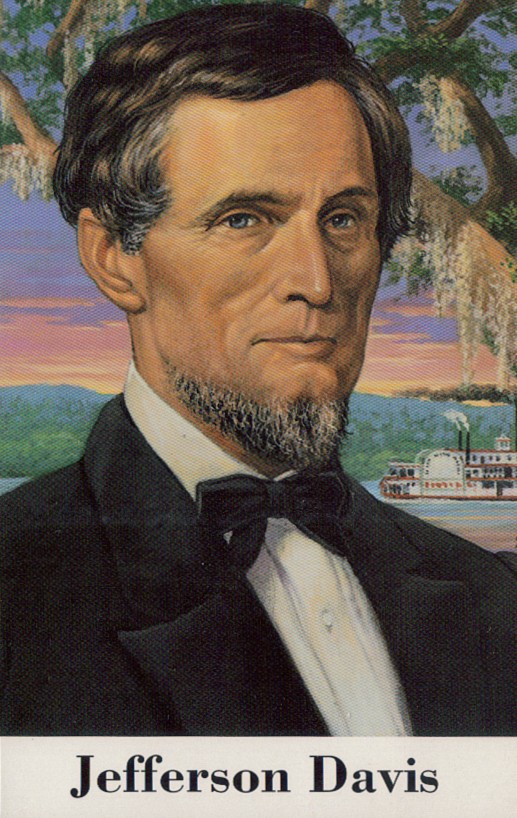
Following Mr. CALHOUN, who pronounced "Slavery the most safe and stable basis for free institutions in the world," and Mr. MCDUFFIE, who did not shrink from calling it "the corner-stone of the Republican edifice," the Senator from South Carolina [Mr. HAMMOND] insists that "its forms of society are the best in the world;" and his colleague [Mr. CHESNUT] takes up the strain. One Senator from Mississippi [Mr. DAVIS] adds that Slavery "is but a form of civil government for those who are not fit to govern themselves;" and his colleague [Mr. BROWN] openly vaunts that it "is a great moral, social, and political blessing - a blessing to the slave and a blessing to the master." One Senator from Virginia, [Mr. HUNTER,] in a studied vindication of what he is pleased to call "the social system of the slaveholding States," exalts Slavery as "the normal condition of human society," "beneficial to the non-slave owner as it is to the slave owner," best for the happiness of both races;" and, in enthusiastic advocacy, declares "that the very keystone of the mighty arch, which by its concentrated strength is able to sustain our social superstructure, consists in the black marble block of African Slavery. Knock that out," he says, "and the mighty fabric, with all that it upholds, topples and tumbles to its fall." These were his very words, uttered in debate here; and his colleague, [Mr. MASON,] who has never hesitated where Slavery was in question, has proclaimed that it is "ennobling to both master and slave" - a word which, so far as the slave was concerned, he changed, on a subsequent day, to "elevating," assuming still that it is "ennobling" to the master - which is simply a new version of an old assumption, by Mr. MCDUFFIE, of South Carolina, that "Slavery supersedes the necessity of an order of nobility."
The New York Times has the text of the speech online. I rely here on the text from the version published in 1863 as Barbarism of Slavery.

Confederate "Heritage" Month, April 15: Charles Sumner on the Slave Power's assault on Kansas Territory

In 1856, Massachusetts Sen. Charles Sumner made a speech on the floor against the Kansas-Nebraska Act, which he referred to as the Crime of Kansas. Kansas Territory had become a violent political conflict between proslavery and antislavery forces. The national government during the proslavery Administrations of Franklin Pierce (President 1853-1857) and James Buchanan (President 1857-1861) strongly favored the proslavery side.

President James Buchanan, more dedicated to defending slavery than defending the Union and the Constitution

Two days after Sumner's speech a cowardly proslavery Congressman, Preston S. Brooks of South Carolina, came into the Senate chamber and snuck up behind Sumner sitting at his Senate desk, and beat him nearly to death with a heavy wooden cane.

Sumner survived. But his health didn't recover sufficiently for him to return to the Senate until 1860. When he returned, he gave his Barbarism of Slavery speech to which I referred earlier this month. He began by returning to the theme of Kansas and the slavery issue which was the central controversy there.

The New York Times has the text of the speech online. I rely here on the text from the version published in 1863 as Barbarism of Slavery.

The crime against Kansas stands forth in painful light. Search history, and you cannot find its parallel. The Slave-trade is bad; but even this enormity is petty compared with that elaborate contrivance by which, in a Christian age, and within the limits of a Republic, all forms of constitutional liberty were perverted; by which all the rights of human nature were violated, and the whole country was held trembling on the edge of civil war while all this large exuberance, of wickedness, detestable in itself, becomes tenfold more detestable when its origin is traced to the madness for Slavery. The fatal partition between Freedom and Slavery, known as the Missouri Compromise; the subsequent overthrow of this partition, and the seizure of all by Slavery; the violation of plighted faith; the conspiracy to force Slavery at all hazards into Kansas; successive invasions by which all security there was destroyed, and the electoral franchise itself was trodden down; the sacrilegious seizure of the very polls, and, through pretended forms of law, the imposition of a foreign Legislature upon this Territory; the acts of this Legislature, fortifying the Usurpation, and, among other things, establishing the test oaths, calculated to disfranchise actual seltlers, friendly to Freedom, and securing the privileges of the citizen to actual strangers friendly to Slavery; the whole crowned by a statute - "the be all and the end all" of the whole usurpation - through which Slavery was not only recognized on this beautiful soil, but made to bristle with a Code of Death such as the world has rarely seen; all these I have exposed on a former occasion. And yet the most important part of the argument was at that time left untouched; I mean that which is found in the character of Slavery. This natural sequel, with the permission of the Senate, I propose now to supply.

Motive is to Crime as soul is to body; and it is only when we comprehend the motive that we can truly comprehend the Crime. Here the motive is found in Slavery and the rage for its extension. Therefore, by logical necessity, must Slavery be discussed; not indirectly, timidly and sparingly, but directly, openly, and thoroughly. It must be exhibited as it is; alike in its influence and in its animating character, so that not only its outside but its inside may be seen.