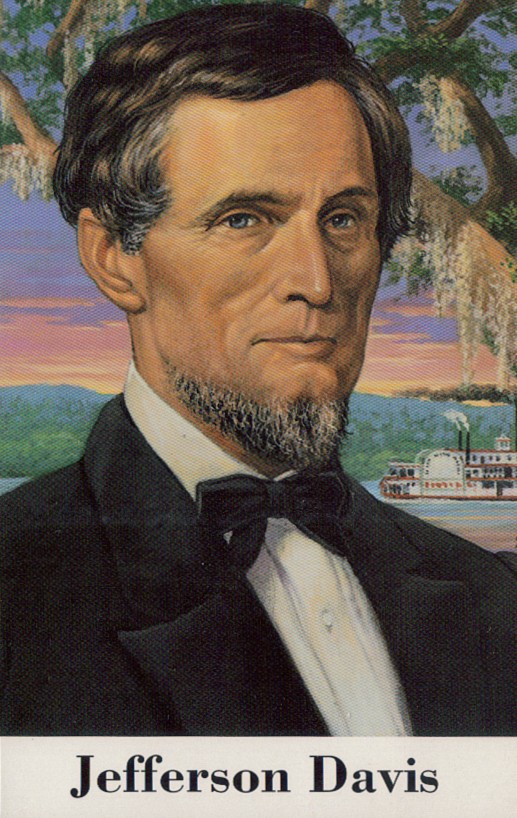
Showing posts with label us civil war. Show all posts

Thursday, April 28, 2016

Confederate "Heritage" Month 2016, April 28:

"World history is not the ground of happiness. The periods of happiness are blank pages in it ..." - Hegel, Philosophy of History (German original: "Die Weltgeschichte ist nicht der Boden des Glücks. Die Perioden des Glücks sind leere Blätter in ihr ...")

I'm continuing here with the discussion of Peter Kolchin's in "Reexamining Southern Emancipation in Comparative Perspective" (Journal of Southern History 81:1 Feb 2015).

Comparing different historical events has a definite empirical aspect. Hopefully, similarities and differences will tell us something important about a particular process. Or it may not.

One comparison he makes is the role of war in ending slavery. While it is obvious in the case of the US Civil War, other cases don't present the same features:

... war frequently weakened slaveholding regimes. Tens of thousands of slaves had escaped from bondage during the American Revolution and the War of 1812, and in the northern states the War for Independence set in motion the eventual abolition of slavery, as did wars for independence in Cuba and much of the Spanish American mainland. The Napoleonic invasion was instrumental in bringing serfdom to an end in Prussia (although in the French Caribbean Napoleon appeared as a reenslaver of those freed by the French Revolution rather than as a liberator).

Usually, however, such wars led to the freedom of some slaves or paved the way for the future ending of bondage, rather than bringing about an immediate or general emancipation. Indeed, despite the enhanced opportunities for freedom provided by the American War for Independence, there were about twice as many slaves in the United States at the conclusion of the Revolutionary era (1800) as there had been at its onset (1770), and despite the massive disruption of slavery during the War of 1812, the censuses of 1810 and 1820 indicate that the enslaved population of the United States increased more than 29 percent during the intervening decade. Although the rebels in Cuba's Ten Years' War (1868-1878) increasingly championed abolition as well as independence, slavery survived in Cuba until 1886. Similarly, although Russia's defeat in the Crimean War helped convince high government officials that serfdom was keeping the country from developing its full military and economic potential and therefore needed to be abolished, the war itself freed almost no one.
He notes parenthetically, "The major exception to this pattern, of course, was the French colony of Saint Domingue, where the slaves engaged in a massive uprising the only successful slave revolution in modern history-and established the Republic of Haiti in 1804." We've looked at the Haitian Revolution several times this month and its relation to slavery and emancipation in the United States.

Kolchin argues that emancipation coming about in the process of a civil war set conditions for making the situation of the liberated slaves a more thoroughgoing formal liberation than in places where it took place by gradual emancipation: "these terms were simple and quintessentially American," he writes, "based upon the principle of republican citizenship."

The term "quintessentially American" has come to be like nails on the blackboard to me. Because it rings of American Exceptionalism. And it's often invoked to describe things that are not at all unique to America. Maybe even not intrinsically American, if even that term makes any sense.

But he explains what the means by the war situation and the terms of emancipation:

Two features of the American version are especially indicative of what would be the increasingly radical experiment that went by the name of Reconstruction. First of all, in contrast to emancipation in many other countries-Prussia, Austria, Russia, the British colonies, Cuba, Brazil, and much of the Spanish American mainland-as well as in most of the northern states after the American Revolution, emancipation in the South was immediate rather than gradually phased in over many years. Second, American emancipation was uncompensated, the only major example of uncompensated confiscation of private property in American history. In recent years, there has been debate over whether the descendants of former slaves should receive some sort of reparations for the suffering of their ancestors, but in the nineteenth century the debate was over whether the masters should receive financial compensation for the loss of their human property. In many other countries (even eventually in Haiti) they did, and as late as 1862 President Lincoln had held out the incentive of partial compensation in a futile effort to convince Confederate rebels to lay down their arms and to convince slaveholders in the loyal slaveholding states-Delaware, Maryland, Kentucky, and Missouri-to accept the freeing of their slaves. Military victory rendered such ideas obsolete, and the Fourteenth Amendment, among its many other provisions, explicitly invalidated both the Confederate war debt and "any claim for the loss or emancipation of any slave." In short, although ending slavery in the southern United States was part of a broad historical process that produced similar features everywhere that it occurred, the specific terms of emancipation that were hammered out during Reconstruction went significantly further than those elsewhere in making citizens of former slaves.
Kolchin compares the post-emancipation situation of African-Americans mostly to that of freed Russian serfs, and shows that the immediate terms of emancipation were indeed more radical in the US.

However, he notes that in the US as well as Russia and Brazil and other countries, there was considerable post-emancipation disappointment among the freed peoples. This is the part that reminds me of Hegel's gloomy observation with which I open this post. Kolchin's descriptions of Reconstruction are important and, like all honest history writing, departs from the neo-Confederate/Lost Cause propaganda version:

The Reconstruction experiment lasted only a few years, of course,and some have seen it as a dismal failure. The process of overthrowing the Reconstruction governments and institutionalizing racial segregation cannot be detailed here, except to note that it involved massive doses of fraud, intimidation, and violence. Reconstruction governments fell at different times in different states, lasting longest in the Deep South, where black voters formed the largest percentage of the population, but were gone everywhere by 1877. In the 1880s and early 1890s conservative Democratic state governments chipped away at Reconstruction initiatives, slashing spending on black education and discouraging black political participation, before launching a more frontal assault on African Americans' civil and political rights at the turn of the twentieth century. An explosion of white racism, marked by a sharp rise in lynching, characterized the 1890s and early years of the twentieth century, and through various quasi-legal devices such as grandfather clauses, poll taxes, and white primaries the great majority of southern African Americans were effectively disenfranchised for more than half a century, in blatant violation of the Fourteenth and Fifteenth Amendments to the Constitution. After the heady days of Reconstruction, the former slaves experienced a deep sense of disappointment and disillusionment, as their early hope for the dawning of a new age faded before the reality of life in the era of Jim Crow.

Wednesday, April 27, 2016

Confederate "Heritage" Month 2016, April 28: Emancipation in the US and abroad

Peter Kolchin in "Reexamining Southern Emancipation in Comparative Perspective" (Journal of Southern History 81:1 Feb 2015) attempts to position the significance of the emancipation of the American slaves in the context of other modern emancipations, from both serfdom and chattel slavery. As Kolchin notes in his article, such comparative approaches are in fashion at the moment in Southern history.

He argues that "in much of the Western world":

Until the second half of the eighteenth century, slavery had seemed an unremarkable feature of life, one consistent-as David Brion Davis has shown-with religion, morality, and progress. There was some sentiment that Christians should not enslave other Christians and Muslims should not enslave other Muslims-that is, in the language of the time, slavery was fit only for "infidels"-but there was little sense that slavery in general was wrong or undesirable.

But then with the progress of democratic and republican ideas and revolutionary movements both in the Old World and the New:

Then, beginning in the years leading up to the major Atlantic revolutions of the late eighteenth century, "enlightened" opinion increasingly came to see slavery as problematic. There were different versions of this sentiment: some saw slavery as morally wrong, whereas others argued that it was a backward institution, harmful to society and to economic development. But in an era that increasingly celebrated liberty and equality, slavery and its close twin serfdom, institutions that had for centuries been taken for granted, became objects of intense scrutiny; and over a period of a little more than a century they were abolished throughout the West-bthat is, Europe and European-derived societies in the Americas.
But the Enlightenment was a contradictory phenomenon, which also in some of its manifestations defined aboriginal peoples as "natural" and therefore outside of the civilized world of Reason. Even a major Enlightenment figure like Thomas Jefferson had difficulty imagining that people of African descent could be fully as intelligence and civilized as those of white European descent.

But he is right about how serfdom and slavery came apart with the flowering of capitalist modernism. And he provides this useful timetable about the emancipations in various countries:


Europeans weren't entirely wrong for criticizing or mocking the United States for the genuine contrast between the democratic principles of the government of the white majority and the reality of chattel slavery as a key institution in the American empire of freedom.

Citing the work of James Oakes, he winds up stressing the emancipatory impulse among the Republicans during the Civil War:

... many Republicans saw the war, from its very beginning, as a golden opportunity to move beyond the constitutional limitations that in normal times - that is, in peacetime-prevented the federal government from interfering with slavery in the states where it already existed. Especially important in this regard was the second Confiscation Act, which authorized the seizure and liberation of all slaves owned by rebels. Union army officers pursued varying policies toward African Americans who came under their control, but increasingly they experimented with various forms of free or, in some cases, semi-free labor, on the sea islands off the coast of South Carolina and Georgia, in New Orleans many Republicans saw the war, from its very beginning, as a golden opportunity to move beyond the constitutional limitations that in normal times - that is, in peacetime-prevented the federal government from interfering with slavery in the states where it already existed. Especially important in this regard was the second Confiscation Act, which authorized the seizure and liberation of all slaves owned by rebels. Union army officers pursued varying policies toward African Americans who came under their control, but increasingly they experimented with various forms of free or, in some cases, semi-free labor, on the sea islands off the coast of South Carolina and Georgia, in New Orleans and throughout the lower Mississippi Valley, in northem Virginia, and elsewhere as Confederate territory continued to shrink.

It's part of the neo-Confederate canard that the Civil War was not about slavery to emphasize the limitations of Northern goals when it came to abolishing slavery.

But of course the Southern secessionists were explicit about the reason they were seceding from the Union: to preserve slavery. And while Union war aims were not explicitly directed at abolishing slavery, the North understood that it was necessary to contain slavery and the violent rebellion the slaveowners had ginned up.

When Lincoln issued the Emancipation Proclamation, that meant in the common terminology of the time that the war for the North had changed from a conventional war, aimed at defeating the opponent, to a revolutionary war aimed at overthrowing the social system of the enemy. And the developments described by Kolchin show that process in its rabid development once the war was under way.

Sunday, April 24, 2016

Confederate "Heritage" Month, April 24: Another look at slaveowner viciousness

This is one last post for this year's series on Charles Sumner's Barbarism of Slavery speech speech of 1860. In describing how slavery corrupts the slaveowners themselves, and also thereby challenging the "Southern honor" of which that group claimed to be so proud:

Nobody can look upon virtue and justice, if it be only in images and pictures, without feeling a kindred sentiment. Nobody can be surrounded by vice and wrong, by violence and brutality, if it be only in images and pictures, without coming under their degrading influence. Nobody can live with the one without advantage; nobody can live with the other without loss. Who could pass his life in the secret chamber where are gathered the impure relics of Pompeii, without becoming indifferent to loathsome things? But if these loathsome thing are not merely sculptured and painted if they exist in living reality - if they enact their hideous capers in life, as in the criminal pretensions of Slavery - while the lash plays and the blood spirts - while women are whipped and children are sold - while marriage is polluted and annulled - while the parental tie is rudely torn - while honest gains are filched or robbed - while the soul itself is shut down in all the darkness of ignorance, and while God himself is defied in the pretension that man can have property in his fellow man; if all these thing are present, not merely in images and pictures but in reality, their influence on character must be incalculable. ...

Instead of "ennobling" the master, nothing can be clearer than that the slave drags his master down; and this process begins in childhood and is continued through life. Living much in association with his slave, the master finds nothing to remind him of his own deficiencies, to prompt his ambition or excite his shame. Without these provocations to virtue, and without an elevated example, he naturally shares the barbarism of the society which he keeps. Thus, the very inferiority which the slave-master attributes to the African race explains the melancholy condition of the communities in which his degradation is declared by law.

A single false principle or vicious thought may degrade a character otherwise blameless; and this is practically true of the slave master. Accustomed to regard men as property, his sensibilities are blunted and his moral sense is obscured. He consents to acts from which civilization recoils. The early church sold its property, and even its sacred vessels, for the redemption of captives. This was done on a remarkable occasion by St. Ambrose, and successive canons confirmed the example. But in the Slave States this is all reversed. Slaves there are often sold as the property of the Church, and an instance is related of a slave sold in South Carolina in order to buy plate for the communion table. Who can calculate the effect of such an example?
The honorable slaveowners were not much pleased with Sen. Sumner's descriptions of them. Even though those descriptions were accurate.

The New York Times has the text of the speech online. I rely here on the text from the version published in 1863 as Barbarism of Slavery.

Saturday, April 23, 2016

Confederate "Heritage" Month, April 23: Slaveowners and their laws

I'm doing a final couple of posts for this year on Charles Sumner's Barbarism of Slavery speech speech of 1860.

He uses the slave codes of the time to display the slaveowners' characters in an unfavorable light:

Whatever may be the eminence of individual virtue - and I would not so far disparage humanity as to suppose that the offences which may be general where Slavery exists are universal - it is not reasonable or logical to infer that the masses of Slave-masters are better than the Law of Slavery. And since the Law itself degrades the slave to be a chattel, and submits him to their irresponsible control - with power to bind and to scourge; to usurp the fruits of another's labor; to pollute the body; and to outrage all ties of family, making marriage impossible - we must conclude that such enormities are sanctioned by Slave-masters; while the exclusion of testimony and prohibition of instruction - by supplementary law - complete the evidence of their complicity. And this conclusion must stand unquestioned just as long as the Law of Slavery exists unrepealed. Cease, then, to blazon the humanity of Slave-masters. Tell me not of the lenity with which this cruel Code is tempered to its unhappy subjects. Tell me not of the sympathy which overflows from the mansion of the master to the cabin of the slave. In vain you assert such "happy accidents" In vain you show that there are individuals who do not exert the wickedness of the law. The Barbarism still endures, solemnly, legislatively, judicially attested in the very SLAVE CODE, and proclaims constantly the character of its authors.
The New York Times has the text of the speech online. I rely here on the text from the version published in 1863 as Barbarism of Slavery.

Friday, April 22, 2016

Confederate "Heritage" Month 2016, April 22: Slavery and classical liberalism

I posted in a previous year's series on how classical liberalism viewed slavery, Confederate "Heritage" Month 2010, April 3: Slavery, race and classical economics.

Sen. Charles Sumner in his famous Barbarism of Slavery speech speech of 1860 from which I've been quoting in several posts, also noted a couple of examples in addition to Thomas Jefferson who criticized the institution of slavery. One was John Locke:

Next comes the Philosophic Authority; and here the language which I quote may be less familiar, but it is hardly less commanding. Among names of such weight, I shall not discriminate, but shall simply follow the order of time in which they appeared. First is John Locke, the great author of the English system of Intellectual Philosophy, who, though once unhappily conceding indulgence to American Slavery, in another place describes it, in words which every slave master should know, as--

"The state of war continued between a lawful conqueror and his captive. ... So opposite to the generous temper and courage of our nation, that 'tis hardly to be conceived that an Englishman, MUCH LESS A GENTLEMAN, should plead for it."
Then comes Adam Smith, the founder of the science of Political Economy, who, in his work on Morals, thus utters himself:

"There is not a negro from the coast of Africa who does not possess a degree of magnanimity which the soul of his sordid master is too often scarce capable of conceiving. Fortune never exerted more cruelly her empire over mankind, than when she subjected these nations of heroes to the refuse of jails of Europe, to wretches who possess the virtues neither of the countries which they came from, nor of those which they go to, and whose levity, brutality and baseness so justly expose them to the contempt of the vanquished." -- Theory of Moral Sentiments, part 2. Chapter 2.
This judgment, pronounced just a country ago, was repelled by the Slave-masters of Virginia, in a feeble publication which attests at least their own consciousness that they were the criminals arraigned by the distinguished philosopher. This was soon followed by the testimony of the great English moralist, Dr. Johnson, who, in a letter to a friend, thus shows his opinion of Slave-masters:

"To omit for a year, or for a day, the most efficacious method of advancing Christianity, in compliance with any purposes that terminate on this side the grave, is a crime of which I know not that the world has had an example except in the practice of the planters of America, a race of mortals whom I suppose, no other man wishes to resemble." -- Letter to William Drummond, 13th August , 1766. (Boswell's Life of Johnson, by Corker.)

The New York Times has the text of the speech online. I rely here on the text from the version published in 1863 as Barbarism of Slavery.

Thursday, April 21, 2016

Confederate "Heritage" Month 2016, April 21: Slaveowners and despotism

We've been looking in several posts now at Charles Sumner's Barbarism of Slavery speech speech of 1860.

Sumner knew a lot about the character of slavemasters and their supporters. He cited Thomas Jefferson, who was of course a slavemaster himself, who also knew a lot about the topic:

"There must be an unhappy influence on the manners of our people, produced by the existence of Slavery among us. The whole commerce between master and slave is a perpetual exercise of the most boisterous passions, THE MOST UNREMITTING DESPOTISM on the one part, and degrading submissions us on the other; our children see this, and learn to imitate it. ... The man must be a prodigy who can retain his manners and morals undepraved by such circumstances. And with what execration should the statesman be loaded, who, permitting one-half the citizens thus to trample on the rights of the other, transforms those into despots, and these into enemies, destroys the morals of the one part, and the amor patrie of the other! ... With the morals of the people, their industry is also destroyed."
The New York Times has the text of the speech online. I rely here on the text from the version published in 1863 as Barbarism of Slavery.

Wednesday, April 20, 2016

Confederate "Heritage" Month 2016, April 20: free civilization vs. slavery

Continuing with Charles Sumner's Barbarism of Slavery speech speech of 1860.

After describing the various way in which slavery is in direct opposition to the principles and practices of democracy, which we've seen in previous posts, Sumner discusses the legal roots of slavery, concluding (p. 19):

Then he discusses the various ways in which slavery retards the general economic progress of the economies of the slave states, or what he calls "the practical results of Slavery." He compares the free states versus the slave states, starting with the argument that the slave states "excel of Free States in all natural advantages," including size, climate and waterways useful for transport. "But Slavery plays tbe part of a Harpy, und defiles the choicest banquet."

And he proceeds to compare the slave and free areas on population growth, total property values (with and without human property counted), agricultural output, manufacturing, domestic and foreign commerce, railroads and canals, postal service ("which is not only the agent of commerce, but of civilization"), charity, education including libraries, press freedom and quantity, patents, literacy among whites, and emigration. He summarizes this portion of his long speech like this:

Thus, at every point is the character of Slavery more and more manifest, rising and dilating into an overshadowing Barbarism, darkening the whole land. Through its influence, population, values of all kinds, manufactures, commerce, railroads, canals, charities, the Post-office, colleges, professional schools, academies, public schools, newspapers, periodicals, books, authorship, inventions, are all stunted, and, under a Government which professes to be founded on the intelligence of the people, one in twelve of the white adults in the region of Slavery is officially reported as unable to read and write. Never was the saying of Montesquieu more triumphantly verified, that countries are not cultivated by reason of their fertility, but by reason of their liberty. To this truth the Slave States constantly testify by every possible voice. Liberty is the powerful agent which drives the plow, the spindle, and the keel; which opens avenues of all kinds; which inspires charity; which awakens a love of knowledge, and supplies the means of gratifying it. Liberty is the first of schoolmasters.
The New York Times has the text of the speech online. I rely here on the text from the version published in 1863 as Barbarism of Slavery.

Tuesday, April 19, 2016

Confederate "Heritage" Month, April 19: Slavery and the exploitation of labor

I've been using portions of Charles Sumner's Barbarism of Slavery speech of 1860 because it's an excellent contemporary analysis of and judgment against the slavery system. In it, he listed five major inherent aspects of the system that were inherently evil. The fifth he described was this one:

Slavery paints itself again in the appropriation of all the toil of its victims, excluding them from that property in their own earnings which the law of nature allows and civilization secures. The painful injustice of this pretension is lost in its meanness. It is robbery and petty larceny under the garb of law; and even its meanness is lost in the absurdity of its associate pretension that the African, thus despoiled of all his earnings, is saved from poverty, and that for his own good he must work for his master, and not for himself. Alas! by such a fallacy is a whole race pauperized! ...

... [A] celebrated traveler through Russia, more than a generation ago, describes a kindred spirit, who, while on his knees before an altar of the Greek Church, devoutly told his beads with one hand, and with the other deliberately picked the pocket of a fellow-sinner by his side. Not admiring these instances, I cannot cease to deplore a system which has much of both, while, under an affectation of charity, it sordidly takes from the slave all the fruits of his bitter sweat, and thus takes from him the mainspring to exertion.
And he summarizes this part of his case against slavery:

Such is Slavery in its five special elements of barbarism, as recognized by law; first, assuming that man can hold property in man; secondly, abrogating the relation of husband and wife; thirdly, abrogating the parental tie; fourthly, closing the gates of knowledge; and fifthly appropriating the unpaid labor of another. Take away these elements, sometimes called "abuses," and Slavery will cease to exist, for it is these very "abuses" which constitute Slavery. Take away any one of them, and the abolition of Slavery begins. And when I present Slavery for judgment, I mean no slight evil, with regard to which there may be a reasonable difference of opinion, but I mean this five-fold embodiment of "abuse" - this ghastly quincunx of barbarism - each particular of which, it considered separately, must be denounced at once with all the ardor of an honest soul, while the whole five-fold combination must awake a five-fold denunciation.

But this five-fold combination becomes still more hateful when its single motive is considered. The Senator from Mississippi [Mr. DAVIS] says that it is "but a form of civil government for those who are not fit to govern themselves." The Senator is mistaken. It is an outrage where five different pretensions all concur in one single object, looking only to the profit of the master, and constituting its ever-present motive power, which is simply to compel the labor of fellow men without wages! [my emphasis in bold]
The New York Times has the text of the speech online. I rely here on the text from the version published in 1863 as Barbarism of Slavery.

Monday, April 18, 2016

Confederate "Heritage" Month, April 18: Family values of slavery

Charles Sumner's Barbarism of Slavery speech of 1860 is a gift that keeps on giving for providing a contemporary judgment against slavery:

Slavery paints itself again in its complete abrogation of marriage, recognized as a sacrament by the Church, and recognized as a contract wherever civilization prevails. Under the law of Slavery no such sacrament is respected, and no such contract can exist. The ties that may be formed between slaves are all subject to the selfish interests or more selfish lost of the master, whose license knows no check. Natural affections which have come together are rudely torn asunder; nor is this all. Stripped of every defence, the chastity of a whole race is exposed to violence, while the result is recorded in the telltale faces of the children, glowing with their master's blood, but doomed for their mother's skin to Slavery, through all descending generations. The Senator from Mississippi [Mr. BROWN] is galled by the comparison between Slavery and Polygamy, and winces. I hail this sensibility as the sign of virtue. Let him reflect, and he will confess that there are many disgusting elements in Slavery which are not present in Polygamy, while the single disgusting element of Polygamy is more than present in Slavery. By the license of Polygamy one man may have many wives, all bound to him by the marriage tie, and in other respects protected by law. By the license of Slavery, a whole race is delivered over to prostitution and concubinage, without the protection of any law.
And that was an accurate, reasonable description of the reality of slavery in the US.

The New York Times has the text of the speech online. I rely here on the text from the version published in 1863 as Barbarism of Slavery.

[This post has been updated for clarity.]

Sunday, April 17, 2016

Confederate "Heritage" Month, April 17: In which Charles Sumner goes Biblical on the Slave Power

Southern slaveowners justified their Peculiar Institution of slavery as ordained by God. Charles Sumner in his Barbarism of Slavery speech didn't hesitate to dispute that assumption:

... I oppose the essential Barbarism of Slavery in all its influences, whether high or low, as Satan is Satan still, whether towering in the sky or squatting in the load. ...

Language is feeble to express all the enormity of this institution, which is now vaunted as in itself a form of civilization, "ennobling" at least to the master, if not the slave. Look at it in whatever light you will, and it is always the scab, the canker, the "bare bones," and the shame of the country; wrong, not merely in the abstract, as is often admitted by its apologists, but wrong in the concrete also, and possessing no single element of right. Look at it in the light of principles, and it is nothing less than a huge insurrection against the eternal law of God, involving in its pretensions the denial of all human rights, and also the denial of the Divine Law which God himself is manifest, thus being practically the grossest lie and the grossest Atheism. Founded in violence, sustained only by violence, such a wrong must by a sure law of compensation blast the master as well as the slave; blast the lands on which they live; blast the community of which they are a part; blast the Government which does not forbid the outrage; and the longer it exists, and the more completely it prevails, must its blasting influences penetrate the whole social system. Barbarous in origin; barbarous in its law; barbarous in all its pretensions; barbarous in the instruments it employs; barbarous in consequences; barbarous in spirit; barbarous wherever it shows itself, Slavery must breed barbarians, while it develops everywhere alike in the individual, and in the society of which he forms a part, the essential elements of Barbarism. ...

Idolatry has been often exposed in the presence of idolaters, and hypocrisy has been chastised in the presence of Scribes and Pharisees. Such examples may give encouragement to a Senator who undertakes in this presence to expose Slavery; nor can any language, directly responsive to the assumptions now made for this barbarism, be open to question. Slavery can only be painted in the sternest colors; but I cannot forget that nature's sternest painter has been called the best.
Sumner proceeds to undertake what academics call an immanent critique of slavery by looking at the laws on slavery and explicating what they mean in practical, human terms:

Sir, look at its plain import, and see the relation which it establishes. The slave is held simply for the use of his master, to whose behests his life, liberty and happiness are devoted, and by whom he may be bartered, leased, mortgaged, bequeathed, invoiced, shipped as cargo, stored as goods, sold on execution, knocked off at public auction, and even staked at the gaming table, on the hazard of a card or die; all according to law. Nor is there anything within the limit of life inflicted on a beast which may not be inflicted on a slave. He may be marked like a hog, branded like a mule, yoked like an ox, hobbled like a horse, driven like an ass, sheared like a sheep, maimed like a cur, and constantly beaten like a brute; all according to law. And should life itself be taken, what is the remedy? The Law of Slavery, imitating that rule of evidence which in barbarous days and barbarous countries prevented a Christian from testifying against a Mohamedan, openly pronounces the incompetency of the whole African race, whether bond or free, to testify in any case against a white man; and thus having already surrendered the slave to all possible outrage, crowns its tyranny by excluding the very testimony through which the bloody cruelty of the Slave-master might be exposed.

Thus in its Law does Slavery paint itself ....
The New York Times has the text of the speech online. I rely here on the text from the version published in 1863 as Barbarism of Slavery.

Confederate "Heritage" Month, April 16: Prewar Southern defenses of slavery

I'm continuing here with more from Sen. Charles Sumner's "Barbarism of Slavery" Senate speech of 1860. In understanding the Civil War, especially the central role of slavery in it, it's necessary to look at the actual conflict that led up to the war. A key part of the Lost Cause/neo-Confederate pseudohistory is to deny the role of slavery in creating the conflict.

Slavery "is but a form of civil government for those who are not fit to govern themselves;"

Sumner had long since been fed up with what today we would call "bipartisan" compromises that all moved in the direction of making slavery legal in all parts of the United States:

Senators sometimes announce that they resist Slavery on political grounds only, and remind us that they say nothing of the moral question. This is wrong. Slavery must be resisted not only on political grounds, but on all other grounds, whether social, economical or moral. Ours is no holiday contest, nor is it any strife of rival factions; of white and red roses; of theatric Neri and Bianchi; but it is a solemn battle between Right and Wrong - between Good and Evil. Such a battle cannot be fought with excuses or with rosewater. There is austere work to be done, and Freedom cannot consent to fling away any of her weapons.
Sumner held up to the defenders of slavery their own words on the subject:

Following Mr. CALHOUN, who pronounced "Slavery the most safe and stable basis for free institutions in the world," and Mr. MCDUFFIE, who did not shrink from calling it "the corner-stone of the Republican edifice," the Senator from South Carolina [Mr. HAMMOND] insists that "its forms of society are the best in the world;" and his colleague [Mr. CHESNUT] takes up the strain. One Senator from Mississippi [Mr. DAVIS] adds that Slavery "is but a form of civil government for those who are not fit to govern themselves;" and his colleague [Mr. BROWN] openly vaunts that it "is a great moral, social, and political blessing - a blessing to the slave and a blessing to the master." One Senator from Virginia, [Mr. HUNTER,] in a studied vindication of what he is pleased to call "the social system of the slaveholding States," exalts Slavery as "the normal condition of human society," "beneficial to the non-slave owner as it is to the slave owner," best for the happiness of both races;" and, in enthusiastic advocacy, declares "that the very keystone of the mighty arch, which by its concentrated strength is able to sustain our social superstructure, consists in the black marble block of African Slavery. Knock that out," he says, "and the mighty fabric, with all that it upholds, topples and tumbles to its fall." These were his very words, uttered in debate here; and his colleague, [Mr. MASON,] who has never hesitated where Slavery was in question, has proclaimed that it is "ennobling to both master and slave" - a word which, so far as the slave was concerned, he changed, on a subsequent day, to "elevating," assuming still that it is "ennobling" to the master - which is simply a new version of an old assumption, by Mr. MCDUFFIE, of South Carolina, that "Slavery supersedes the necessity of an order of nobility."
The New York Times has the text of the speech online. I rely here on the text from the version published in 1863 as Barbarism of Slavery.

Confederate "Heritage" Month, April 15: Charles Sumner on the Slave Power's assault on Kansas Territory

In 1856, Massachusetts Sen. Charles Sumner made a speech on the floor against the Kansas-Nebraska Act, which he referred to as the Crime of Kansas. Kansas Territory had become a violent political conflict between proslavery and antislavery forces. The national government during the proslavery Administrations of Franklin Pierce (President 1853-1857) and James Buchanan (President 1857-1861) strongly favored the proslavery side.

President James Buchanan, more dedicated to defending slavery than defending the Union and the Constitution

Two days after Sumner's speech a cowardly proslavery Congressman, Preston S. Brooks of South Carolina, came into the Senate chamber and snuck up behind Sumner sitting at his Senate desk, and beat him nearly to death with a heavy wooden cane.

Sumner survived. But his health didn't recover sufficiently for him to return to the Senate until 1860. When he returned, he gave his Barbarism of Slavery speech to which I referred earlier this month. He began by returning to the theme of Kansas and the slavery issue which was the central controversy there.

The New York Times has the text of the speech online. I rely here on the text from the version published in 1863 as Barbarism of Slavery.

The crime against Kansas stands forth in painful light. Search history, and you cannot find its parallel. The Slave-trade is bad; but even this enormity is petty compared with that elaborate contrivance by which, in a Christian age, and within the limits of a Republic, all forms of constitutional liberty were perverted; by which all the rights of human nature were violated, and the whole country was held trembling on the edge of civil war while all this large exuberance, of wickedness, detestable in itself, becomes tenfold more detestable when its origin is traced to the madness for Slavery. The fatal partition between Freedom and Slavery, known as the Missouri Compromise; the subsequent overthrow of this partition, and the seizure of all by Slavery; the violation of plighted faith; the conspiracy to force Slavery at all hazards into Kansas; successive invasions by which all security there was destroyed, and the electoral franchise itself was trodden down; the sacrilegious seizure of the very polls, and, through pretended forms of law, the imposition of a foreign Legislature upon this Territory; the acts of this Legislature, fortifying the Usurpation, and, among other things, establishing the test oaths, calculated to disfranchise actual seltlers, friendly to Freedom, and securing the privileges of the citizen to actual strangers friendly to Slavery; the whole crowned by a statute - "the be all and the end all" of the whole usurpation - through which Slavery was not only recognized on this beautiful soil, but made to bristle with a Code of Death such as the world has rarely seen; all these I have exposed on a former occasion. And yet the most important part of the argument was at that time left untouched; I mean that which is found in the character of Slavery. This natural sequel, with the permission of the Senate, I propose now to supply.

Motive is to Crime as soul is to body; and it is only when we comprehend the motive that we can truly comprehend the Crime. Here the motive is found in Slavery and the rage for its extension. Therefore, by logical necessity, must Slavery be discussed; not indirectly, timidly and sparingly, but directly, openly, and thoroughly. It must be exhibited as it is; alike in its influence and in its animating character, so that not only its outside but its inside may be seen.

Wednesday, April 13, 2016

Confederate "Heritage" Month 2016, April 13: Charles Sumner on the cause of the Civil War

Sen. Charles Sumner of Massachusetts was one of the leading critics of the Slave Power. One of his speeches, not popular in the slave states, was published under the name Barbarism of Slavery (1863). It was a Senate speech of June 4, 1860, in the summer before the election that made Abraham Lincoln President. In the wartime 1863 introduction, Sumner wrote:

It is now more than three years since I deemed it my duty to expose, in the Senate, the Barbarism of Slavery. This phrase, though common now, was new then. The speech was a strict and logical reply to the assumptions of Senators, asserting the "divine origin" of Slavery, its "ennobling" character, and that it was the "black marble keystone" of our national arch. Listening to these assumptions, which were of daily recurrence, I felt that they ought to be answered. ...

In that debate the issue was joined which is still pending in the Trial by Battle. The inordinate assumptions for Slavery naturally ripened in Rebellion and War. If Slavery were, in reality, all that it was said to be by its representatives, they must have failed in duty if they did not vindicate and advance it. Not easily could they see a thing so "divine" and so "ennobling" — constituting the "black marble keystone" of our national arch discredited by a popular vote, even if not yet doomed to sacrifice.

The election of Mr. Lincoln was a judgment against Slavery, and its representatives were aroused. [my emphasis]
Charles Sumner (1811-1874)

The reason for the war was very clear to Americans on both sides of the line:

Therefore, there are two apparent rudiments to this war. One is Slavery and the other is State Rights. But the latter is only a cover for the former. If Slavery were out of the way there would be no trouble from State
Rights.

The war, then, is for Slaver}', and nothing else. It is an insane attempt to vindicate by arms the lordship which had been already asserted in debate. With mad-cap audacity it seeks to install this Barbarism as the truest Civilization. Slavery is declared to be the "corner-stone" of the new edifice. This is enough. ...

Such is the issue simply stated. On the one side are women and children on the auction-block; families rudely separated; human flesh lacerated and scarred by the bloody scourge; labor extorted without wages; and all this frightful, many-sided wrong is the declared foundation of a mock commonwealth. On the other side is the Union of our Fathers, with the image of "Liberty" on its coin and the sentiment of Liberty in its Constitution, now arrayed under a patriotic Government, which insists that no such mock Commonwealth, having such a declared foundation, shall be permitted on our territory, purchased with money and blood, to impair the unity of our jurisdiction and to insult the moral sense of mankind. [my emphasis in bold]


Confederate "Heritage" Month 2016, April 12: Music day

Uh oh, I'm a day behind in my CHM posts!

For today, or rather yesterday. Here Pete Seeger singing Tenting Tomight:


That's one of my favorite songs, actually. It's from the Folkways album Songs of the Civil War (1960).

The liner notes to the album tell this about the song:

Walter Kittredge wrote this hauntingly moving plea for peace in 1863, shortly after receiving his draft notice. Kittredge, however, never served in the army, a childhood bout with rheumatic fever being the cause of his deferment. But while Kittredge didn't go to war, his song did, where it became immensely popular with both soldier and civilian.
Another song on the album is Pete Seeger and Bill McAdoo singing the Marching Song of the First of Arkansas. The liner notes have the following about this song:

This stirring marching song of the Negro troops who comprised the First Arkansas Regiment was used as a recruiting song to enlist Negroes in the Union Army. In fact, the song was published as a broadside by the Supervisory Committee for Recruiting Colored Regiments. Capt. Lindley Miller was the white officer of the Negro regiment, and while Miller may have written some of the verses to this song, others seem to have the genuine stamp of the Negro folk idiom. The original song runs some eight verses, from which Pete Seeger and Bill McAdoo have excerpted the following three:


Here's a version by, uh, Tennessee Ernie Ford. Which gives a hint why he wasn't entirely popular with the hardline segregationist crowd, Tennessee Ernie Ford Marching Song Of the First Arkansas Negro Regiment. He has a verse not in the other one:


Saturday, April 19, 2014

Confederate "Heritage" Month 2014, April 19: How was death viewed during the Civil War?

Today I'm posting about the actual Civil War. Or rather, about something on how the Civil War is remembered.

Nicholas Marshall in The Civil War Death Toll, Reconsidered New York Times 04/15/2014 explains that Civil War historiography in recent years has focused on how the level of killing during the war affected public perceptions.

This topic interests me also because it puts into perspective the still-common assumption that the level of television coverage of the Vietnam War played a key role in undermining public support for it. In the Civil War, the battles themselves were taking place at home and people near the battlefields could see the battles and the many bodies left behind after the larger ones. Yet public support in the North and the South held firmly enough to keep the carnage going for four full years.

One part of the aftermath of the Battle of Gettysburg

James McPherson in Dark Victories New York Review of Books 04/17/2008 issue reviewed two books dealing with this aspect of the Civil War, This Republic of Suffering: Death and the American Civil War (2008) by Drew Gilpin Faust and Awaiting the Heavenly Country: The Civil War and America’s Culture of Death (2008) by Mark Schantz. McPherson offers a contrast in the approach the two historians' books take to the understanding of and rituals around death in American culture at the time:

Drew Gilpin Faust ... in This Republic of Suffering ... contrasts the preoccupation of antebellum Americans with death to our discomfort with the subject today. But while Schantz believes that "antebellum Americans could face death with resignation and even joy because they carried in their hearts and heads a comforting and compelling vision of eternal life," Faust portrays death, however frequent, as a heart-wrenching experience for both the dying and their surviving loved ones. If there was a "culture of death," it consisted of rituals to cushion the numbing shock of loss. Faust labels the most important ritual "the concept of the Good Death." Such a death occurred at home in bed surrounded by family and friends who provided every comfort during the last hours of life. The dying person spoke last words assuring everyone that she or he was ready to depart in peace and to meet them again in the afterlife where the strife and hardships of earthly toil were unknown. "By the 1860s," Faust writes, "many elements of the Good Death" had been largely "separated from their explicitly theological roots." Assumptions about "the way to die" had "spread beyond formal religion to become a part of more general systems of belief held across the nation about life’s meaning and life’s appropriate end."

McPherson also reminds us that seeing dead bodies of soldiers scarcely leads exclusively in itself to lack of support for further war and killing:

Although few soldiers had read Saint Augustine or Hugo Grotius on the theory of "just war," they eventually developed their own version of this doctrine as applied to "Yankee vandals" or "Rebel traitors." A variety of beliefs and attitudes helped soldiers to overcome the sixth commandment, among them ideas of duty and self-defense (kill or be killed), a desire for revenge against a demonized enemy who had killed their comrades, the murderous hatred of Confederate soldiers toward black Union soldiers, and the latter's retaliation for the massacres of captured black soldiers by frenzied Confederates. Veteran soldiers became hardened to death. They were, in Faust's words, "never quite the same again after seeing fields of slaughtered bodies destroyed by men just like themselves." [my emphasis]
McPherson summarizes the significance of the two authors' interpretation this way:

For both Schantz and Faust, this loss of life and the cultural institutions Americans constructed to cope with it are the most enduring legacy of the Civil War. The "horribly luminous" reality of 620,000 war dead, writes Schantz, "worked profound transformations on American society." For Faust, "death created the modern American union" The dying and killing "transformed society, culture, and politics in what became a broader republic of shared suffering." The "meaning of the war had come to inhere in its cost .... The Civil War Dead became both powerful and immortal, no longer individual men but instead a force that would shape American public life for at least a century to come." [my emphasis]
McPherson doesn't buy the notion that this is "the most enduring legacy of the Civil War." For one thing, there's "its apparent morbidity." But there is also the fact that the war for all its death did produce important constructive and democratic results:

Faust makes a strong case that the creation of national cemeteries with their constituency of mourners and the slain changed “the very definition of the nation and its obligations.” But I think that the Thirteenth to Fifteenth Amendments, which defined freedom, citizenship, and equality, were even more nationalizing and transformative. Despite the war’s “harvest of death,” almost four times more soldiers survived than died. Their veterans’ reunions well into the twentieth century commemorated the sacrifices of comrades who had given their lives in the war, to be sure, but they also celebrated the achievements of the living.
Nicolas Marshall suggests that the level of the body count may also be exaggerated in terms of its affects on how the country viewed death:

Solid scholarly work exists on the central importance of death in antebellum America and the ordinary experience of death during the war, but Civil War historians have tended to sidestep this literature in order to claim the war years as exceptional. They have also underplayed the significance of the demographic realities that Americans faced before, during, and after the war. These reveal a society constantly coping with large-scale mortality. Americans throughout the period were lucky if they survived into middle age, and they recognized that life was more fragile than we do today. ...

Given these circumstances, it is important to remember that approximately two-thirds of the deaths of soldiers came as a result of disease, rather than on the battlefield. Looking back from today, these numbers are difficult to fathom, and the image conjured by them is of horrendously unsanitary conditions in military camps. After all, these deaths seem to be as much a product of war as those that resulted from wounds: soldiers in camp were there to fight the war and they died because the conditions were necessary to conduct field operations with a massive army.
He cites the variability of the death rate in different parts of the country that were differently affected by the war. Which, of course, also applies to my point about people seeing the bodies on the battlefied, something far more likely in some parts of the country than others.

Marshall also notes this:

The experience with epidemic sickness and death in other historical moments should also remind us that Americans have been much more blasé about death from sickness than they are today. During the global flu epidemic at the end of the World War I as many as 100 million worldwide, including 600,000 in the United States (roughly five times the number of American casualties in World War I and approaching the total number of deaths in the Civil War), perished over the course of just a few months. In addition, this was an unusual strain of influenza that killed mainly the healthiest cohort of the population (those in their 20s and 30s) through a violent immune response. If any event should have triggered re-evaluation of the nation’s approach to death (based solely on changes in incidence and scale, as Civil War historians often calculate), this would be it.

Yet one historian’s book on the subject is titled “America’s Forgotten Pandemic,” and he spends a significant portion of the book trying to explain why the epidemic seemed to disappear from public consciousness so soon after it waned. The answer, in part, is that well into the 20th century Americans viewed disease — and the death that came with it — as a constant, as something that had to be dealt with as part of everyday existence.
War is also one of the most long-standing practices of the human race, God help us. And there are a huge number of cultural rituals, assumptions and attitudes around war that heavily condition the larger social reaction to death in war.

Tags: ,

Sunday, April 03, 2011

Continuity in white racism

I recently read extensively through secessionist-era speeches and sermons. Word for word, they echoed the racist diatribes that I heard growing up in the South - from invocations of African barbarism to blatant portrayals of rape and racial amalgamation. Secession died in 1865, but the ugly sentiments behind it persisted. My hope is that the 150th anniversary of the Civil War will spur reasoned discourse and an end to our forebears' destructive vision. I also hope that it will end denial by my fellow white Southerners. The next time you hear someone proclaim that secession was about state's rights, not slavery, ask what right it was that the seceding states were so anxious to protect. [my emphasis]
This is from the contribution of Gordon Rhea to the article A Civil Discourse Charleston Magazine April 2011 (scrool down). It's a reminder of the elements of direct continuity from the days of slavery and the white racism that developed to justify it and white racism of today. As Rhea points out, that means that Confederate imagery is very servicable to present-day white racist agendas:

The Confederate battle flag of my youth represented opposition to integration. Today, it decorates the armbands of skinheads and white supremacists here and abroad.

Confederate apologists protest that hate groups have hijacked their flag, that Confederate symbols represent a proud heritage, not a hateful ideology. But white supremacists did not appropriate the Confederate flag by accident. They were not drawn to it simply by its design. They embraced it because it represented a nation stridently and openly dedicated to its principles. In 1861, the Confederacy's vice president Alexander Stephens proclaimed: "The Confederacy's foundations are laid, its cornerstone rests, upon the great truth that the Negro is not equal to the white man, that slavery, subordination to the superior race, is his natural and normal condition. This, our new government, is the first, in the history of the world, based on this great physical, philosophical, and moral truth." [my emphasis]
He also points to the sometimes hysterical fears that antebellum slaveowners embraced and encouraged, which was a huge part of the political dynamic that led to the Civil War:

Southern spokesmen described an apocalyptic vision of emancipation, race wars, and miscegenation: The collapse of white supremacy would be so cataclysmic that no self-respecting Southerner could fail to rally to the secessionist cause. Modern Confederate apologists contend that secession was about "states rights," not slavery. They should read the speeches and pronouncements of their forebears, who give lip service to "states' rights" only in the context of the rights of states to decide whether some of their inhabitants could own other humans.
Tags: , , , ,

Sunday, March 27, 2011

Slavery and cotton

The New York Times is running a Disunion blog on the events of the Civil War. It has the great virtue of focusing on contemporary sources from the time, an approach which makes any neo-Confederate/Lost Cause version of the Civil War and slavery very difficult to justify. Gene Dattel in When Cotton Was King 03/26/2011 takes on one of the favorite neo-Confederate arguments, the claim that slavery would have faded out on its own without the Civil War and the Emancipation Proclamation and the 13th and 14th Amendments. This false claim in the Lost Cause narrative of American history would become a model for the pro-segregation argument of more recent decades, that segregation would have faded out on its own, probably faster than actually occurred. And that all those Outside Agitators and mean Yankees messing around with the South just preserved it longer! Dattel, author of Cotton and Race in the Making of America (), explains that no fading away of slavery was on the horizon at the time the Civil War began:

But nothing about the cotton economy of 1861 pointed that way. On the eve of the Civil War there was no perceived threat to the existence of slavery; on the contrary, production levels had never been higher, and despite occasional drops in price, cotton was proving a reliably stable profit engine. Indeed, slave-produced cotton had become a formidable political and still-growing economic force: as early as 1838, a partner of Nicholas Biddle, America’s finance king, paid homage to cotton as a weapon: "Cotton ... will be much more effective in bring ... [England] to terms than all the disciplined troops America could bring into the field." In 1858 James Henry Hammond, a senator from South Carolina, asked, "Would any sane nation make war on cotton? ... No power on earth dares to make war upon it. Cotton is King." The ubiquitous faith in cotton made slavery seem impregnable. [My emphasis]

One correction: there certainly was a "perceived threat to the existence of slavery" at the time. Southern leaders and the planter elite had become downright paranoid at the time about the imminent threat they perceived from Northern abolitionism and the Republican Party. Several factors combined to make those Southerners wildly exaggerate the threat in their own minds. But the fact that they may have had inaequate reality-testing skills doesn't change the fact that they clearly perceived a threat to slavery from the Republicans and from the Republican President. Taken out of context, like the factoids used by neo-Confederates typically are, this could be integrated into a Lost Cause argument, e.g., "no one in the South thought slavery was under immediate threat so why would they secede from the Union over that?"

As a logical argument, it wouldn't fit well. But screaming contradictions never both fanatics - when it's a contradiction in their own position. Having said that, Dattel gives a clear description of how the invention of the cotton gin and its widespread implementation combined with a drop in prices for cotton clothing affected the institution of slavery. It was common, even in the South, at the time of the American Revolution to assume that slavery was a temporary institution, though slaveowners for the most part weren't putting time limits on it. In the new states of the newly-founded nation where slavery was a minor factor, slavery was outlawed in the late 18th and early 19th century with literal time limits put on it. But thanks to technology, massive Southern capital investment in slaves and the frantic reaction of white Southerners to slave revolts in Haiti and the United States, by the 1830s slaveowning ideology in the South was shifting to justify slavery as a virtuous permanent institution. That was the position that the Confederate States of America wrote into the Rebel Constitution.

In 1787, there was virtually no cotton grown in America. Two things, however, quickly changed that. Eli Whitney's cotton gin allowed cotton production to go from a process limited by manual labor to an industrial machine, allowing a person to "clean" 50 pounds, rather than one pound, of cotton a day. And of course, the cotton gin didn’t remove manual labor from the process; it just shifted it. In fact, this labor-saving device extended slavery by creating a labor shortage in the cotton fields.

The mass production of cotton was accompanied by a dramatic 90 percent drop in the price of a cotton textile garment. This in turn led to a consumer revolution whose raw material was slave-produced cotton – 80 percent of which was produced in the South. As a result, American cotton production exploded from almost nothing in 1787 to over 4.5 million bales, at 500 lbs. a bale, by 1860. On the eve of the war, cotton comprised almost 60 percent of America’s exports.

Slavery expanded accordingly. The number of slaves increased from 700,000 in 1787 to over 4 million on the eve of the American Civil War; approximately 70 percent were involved in some way with cotton production. [my emphasis]

The Disunion blog will presumably also be affected by the Times' latest suicide attempt, limiting the number of articles that non-subscribers can access in a month. But I understand that even over your monthly quota, you will still be able to access blog entries from links. So if you subscribe to Disunion on Facebook, you will get notices of all their entries and can go to them via Facebook. Brilliant business plan: instead of having people click to the entire blog and view ads besides several posts at one page loading, you have them go to Facebook where they view several ads there, and then come to a single blog entry on your site. What could go wrong with that?

Tags: , ,

Sunday, May 03, 2009

John Brown

It doesn't have to be April (Confederate "Heritage" Month) for me to post about Civil War-related issues. Kevin Levin, who writes my favorite Civil War blog (there's beginning to be a whole sub-genre of them), Civil War Memory, was posting this past week about a Civil War Sesquicentennial conference he attended, including a session about John Brown (Session 3 “Making Sense of John Brown’s Raid” 04/29/09). I left a long comment on his post, and I'm passing along the basic content of it here.

I think Brown had a pretty clear plan, and a realistic one, at that. His goal was to seize weapons in Harper’s Ferry, escape from town and go into the Appalachians in the South. There he would set up guerrilla camps in the mountains and make raids to free slaves. He hoped some of the slaves would join him in the effort. His goal was to destabilize the slavery system.


He was certainly aware that the slaveowners and many non-slaveowning Southern whites had a grossly exaggerated fear of "servile insurrection", and that the kind of raids he planned would fan those fears. Which is a big part of the reason even small raids to free slaves would be destabilizing to the system.

But Brown wasn’t trying to stir up a mass slave insurrection. He planned a long-term guerrilla campaign in the mountains, where he could apply the practical skills at "slave-stealing" and guerrilla warfare he had learned in Kansas.

But apparently he did hope that more slaves would abandon their owners on the night of the Harper’s Ferry raid and come together with his core group. That’s probably at least one reason why he delayed so fatally in taking the captured weapons and moving South out of town into the mountains. He also made a deadly tactical error by allowing the passenger train that came into town to leave, because the train crew and passengers were then able to quickly spread the alarm.

And while it’s true that Brown struggled in his various businesses for much of his life, he was actually fairly successful in his early years at tanning and farming. But he got land-speculation fever, borrowed too much money, and the 1837 recession was devastating for him. He continued to struggle economically after that with less success than before.

But he wasn’t the ne’er-do-well scoundrel that advocates of the Lost Cause view like the early Robert Penn Warren tried to make him out to be. His record in business and farming probably compares well to others of his time in similar circumstances. That he didn’t become a large plantation owner or a millionaire industrialist is scarcely the sign of moral depravity that Warren and others tried to portray.

Brown’s egalitarian relationships with blacks - and his commitment to the equality of women - is an important part of his story. Part of the Lost Cause scam is to point to the white supremacist notions common to Northerners and to say, look, they were racists, too, so they couldn’t possibly have cared about slavery. The trick there is to project today’s standards back on the antebellum North and confuse people who might logically think that whites who opposed slavery would also have favored something like equal rights for African-Americans then. In actual fact, white supremacist attitudes actually very often went hand-in-hand with opposition to slavery, even bitter opposition, as in Hinton Helper’s case.

John Brown, on the other hand, was one of the few whites in America who in the 1850s clearly articulated notions of racial and gender equality that 21st century Americans would find to be contemporary. This also raises a big question for me about the accusation that Brown was “crazy”. In fact, Brown had a sacrifice-oriented Calvinist religious faith that he took very seriously. And as part of that, he recognized blacks and women as equals in a way that was unusual for his time, but which we today recognize as being ahead of his time in his democratic outlook.

So, whatever clinical mental health issues he may have had - and I’m not convinced on any of the arguments I’ve seen about that - neither his passionate desire to end slavery (which was shared by many less militant Northerners) nor his guerrilla warfare plan that he initiated at Harper’s Ferry are evidence of any such condition.

Finally, I’m not sure that Virginia’s trial of a wounded Brown who was still so ill he had to lie on a cot during much of it is very strong evidence of Virginia’s dedication to the rule of law in a broader sense. After all, it was a year and a half or so later that they agreed to a bloody rebellion against their own country. So I would say their devotion to the rule of law in general was less profound than their devotion to preserving the Peculiar Institution.

Tags: , ,

Friday, April 17, 2009

Confederate "Heritage" Month 2009, April 17: The Buchanan administration


Mark Graber, author of Dred Scott and the Problem of Constitutional Evil (2006), looks at the coming of the Civil War during the last months of the James Buchanan administration in Secession Winter Revisited Balkinization blog 12/20/08.

Graber takes a relatively generous view of slavery supporter Buchanan's approach in the transition period between Lincoln's election and his taking office, which in those days didn't occur until March of the year following the November election (Lincoln was inaugurated March 4, 1861). Graber picks up on an argument by Richard Ellis that Buchanan may have been trying to follow the model that Andrew Jackson set with his successful handling of the Nullification Controversy of 1833.

In this argument, Buchanan viewed the isolation of South Carolina as having been key to Old Hickory's success in suppressing John C. Calhoun's "nullification" movement, which everyone understood at the time had the defense of slavery at its core, though the nominal issue was tariffs.

Here's how Graber, following Ellis' argument, describes Buchanan's strategy in the face of secession compared to Lincoln's:

Buchanan was faced with a similar problem in 1860, although admittedly a more difficult one. His strategy was not dilatory. Rather, he did pretty much what Jackson did successfully in 1832. He sought first to minimize the damage. The theory may have been pretty simple, although this is pure speculation on my part. Secession may have been viable in the long run only if Virginia, Tennessee, and other middle south states joined in. The longer Virginia stayed out, the more likely a Union preserving compromise. In short, any compromise that holds Virginia may in the long run have made the secession crisis goes away.

Lincoln's strategy was quite different. His goal, as Kenneth Stampp details, was to initiate a Civil War in such a way as to keep Kentucky and Maryland in the Union. Essentially, and for all practical purposes, Lincoln from day one abandoned the "keep Virginia in" strategy. Notice, however, Lincoln could not possibly have claimed a mandate for preferring Civil War to a proslavery compromise. He repeatedly insisted on the campaign trail that secession would not take place after he was elected. Lincoln's policies appear more successful than Buchanan's only if we assume the Civil War was inevitable, that Virginia was inevitably going to leave the Union, so that the only reasonable strategies were aimed at keeping Kentucky in the Union. But other assumptions were reasonable in 1860 and Buchanan's strategy may have been reasonable in light of those assumptions. [my emphasis]
While I think he takes the argument much too far, he does make an important point here. Lincoln had campaigned on the basis of preventing secession. So Buchanan may well have thought that the Presidential victory of the Republican Party, on a plurality due to a three-way partisan split, had provided a mandate for peacefully settling the secession controversy. Or, at a minimum, had not provided a mandate for forceful measures.

But other than that, the argument strikes me as far-fetched. James Buchanan was blatantly pro-slavery and wanted to get the reactionary Supreme Court to push its defense of slavery even further than it already had in the Dred Scott decision of 1857.

Other than the eventual end of Earth when the Sun becomes a supernova a few billion years from now, it's hard to say that any historical event is inevitable, except in retrospect. The Dred Scott decision itself had arguably made the Civil War inevitable. But it was only one - albeit a huge one - in a series of events involving the increasing defensiveness of the slave states which led them to increasingly aggressive measures to require the free states to defend slavery, the demographic shifts that were setting the South up to soon lose their majority in the US Senate, growing antislavery sentiment in the North and abroad, and the self-isolation of the slaveowners from meaningful dissent leading to paranoid interpretations of events.

The mini-civil war in Kansas Territory (1854-59), where John Brown got his start as a guerrilla fighter, was an unmistakable sign that events were sliding toward a broader civil war. It could only have been reversed had the national leadership been able to persuade the Slave Power to back off. But Buchanan did just the opposite. For instance, in the Kansas controversy, he recognized the illegitimate, proslavery Lecompton Constitution which had been rejected by the Kansas voters in 1858. Buchanan had every reason to know that he was adding fuel to the fire and encouraging increased belligerence by the slaveowners.

There's also another problem with the idea that Buchanan was hoping for a repeat of Andrew Jackson's success against nullification. By the time Lincoln took office, actual secession was already well under. And Southern state militias were already seizing federal forts throughout the South, which were armed acts of treason. South Carolina and Mississippi had already seceded in December 1860, and by February 1 had been joined by Florida, Alabama, Georgia, Louisiana and Texas.

It was after Lincoln took office that Virginia, Arkansas, Tennessee and North Carolina declared secession.

Pretty much the only thing Buchanan did right in the transition period was to refuse to surrender Fort Sumter in South Carolina, the last US fortress not yet seized by Southern forces.
Of course, speculation is speculation. But in the case of Andrew Jackson when it came to treason and secession, we know how he handled it in 1833. Graber mentions the Force Act in passing, which was passed along with a lowering of the tariffs, the nominal issue over which South Carolina was protesting in the Nullification Controversy. Jackson was fully prepared to make war on a rebel South Carolina if the fools pushed matters that far. It's inconceivable that he would have allowed the seizure of federal forts by traitor forces or sat back idly while five states seceded. Which is what Buchanan did.

It's also difficult to believe that Buchanan could have seriously thought he was imitating Jackson in the way he dealt with that situation.

This basic fact that secession and acts of war by the secessionists were already under way also makes Graber's statement in the context downright strange when he writes, "Lincoln could not possibly have claimed a mandate for preferring Civil War to a proslavery compromise."

Say what? Prior to the 1860 election, secession was a threat from the paranoid, overbearing and blustering slaveowners. Taking Lincoln's vote and the vote for Democratic candidate Stephan Douglas, there was certainly a mandate opposing secession and favoring preservation of the Union. Lincoln didn't have a mandate for civil war? The Confederates had no mandate for secession and civil war either!

On March 4, 1861, secession was a fact. And the acts of war committed by secessionists in seizing federal forts and property hadn't yet become a civil war because James Buchanan had sat back and let it happen with no armed resistance on the part of the national government.

Even when he took office, Lincoln didn't assume that Civil War was inevitable. Though he would have been a fool (or a James Buchanan) if he had not seen that it would be almost impossible to avoid one. He would have preferred that the newly-formed Confederacy dissolve itself and the states involved renounce their secession. He was restrained on the resupply of Fort Sumter.

But he wasn't going to let the slave states secede and make war on the United States. And he didn't. Nor did the mild and conciliatory policy of Buchanan in letting the rebels seize the forts have much to recommend its continuation as a way of preserving the Union by the time Lincoln took office.

If James Buchanan had been more devoted to preserving the Union and less to the cause of slavery, he would have taken stronger action to block the early secessions. And he would have passed on a situation to Lincoln that maybe could have been resolved without civil war. Or, at least, resolved with a shorter and less destructive war.

Tags: , , , ,

Tuesday, April 07, 2009

Confederate "Heritage" Month 2009, April 7: South Carolina's Declaration of Secession


The last two days' posts discussed a presentation by the Hon. Christopher Gustavus Memminger of South Carolina to the Virginia legislature early in 1860 cataloguing the grievances of the South against the free states.

The Honorable Gentleman later in 1860 a key player in the South Carolina secession. The Declaration of the Immediate Causes Which Induce and Justify the Secession of South Carolina from the Federal Union was adopted by a secessionist state convention on 12/24/1860. It spells out the state's motivation for secession along the same lines as his speech to the Virginia legislature did 11 months earlier.

The General Government, as the common agent, passed laws to carry into effect these stipulations of the States. For many years these laws were executed. But an increasing hostility on the part of the non-slaveholding States to the institution of slavery, has led to a disregard of their obligations, and the laws of the General Government have ceased to effect the objects of the Constitution. The States of Maine, New Hampshire, Vermont, Massachusetts, Connecticut, Rhode Island, New York, Pennsylvania, Illinois, Indiana, Michigan, Wisconsin and Iowa, have enacted laws which either nullify the Acts of Congress or render useless any attempt to execute them. [my emphasis]
The reference here is to laws passed by various free states to impede the enforcement of the federal Fugitive Slave Act of 1850: South Carolina justified its secession on the grounds that free states were asserting states rights to impede the national government in its task of defending slavery.

In many of these States the fugitive [slave] is discharged from service or labor claimed, and in none of them has the State Government complied with the stipulation made in the Constitution. The State of New Jersey, at an early day, passed a law in conformity with her constitutional obligation; but the current of anti-slavery feeling has led her more recently to enact laws which render inoperative the remedies provided by her own law and by the laws of Congress. In the State of New York even the right of transit for a slave has been denied by her tribunals; and the States of Ohio and Iowa have refused to surrender to justice fugitives charged with murder, and with inciting servile insurrection in the State of Virginia [accused supporters of John Brown]. Thus the constituted compact has been deliberately broken and disregarded by the non-slaveholding States, and the consequence follows that South Carolina is released from her obligation.

The ends for which the Constitution was framed are declared by itself to be "to form a more perfect union, establish justice, insure domestic tranquility, provide for the common defence, promote the general welfare, and secure the blessings of liberty to ourselves and our posterity."

These ends it endeavored to accomplish by a Federal Government, in which each State was recognized as an equal, and had separate control over its own institutions. The right of property in slaves was recognized by giving to free persons distinct political rights, by giving them the right to represent, and burthening [sic] them with direct taxes for three-fifths of their slaves; by authorizing the importation of slaves for twenty years; and by stipulating for the rendition of fugitives from labor escaped slaves].

We affirm that these ends for which this Government was instituted have been defeated, and the Government itself has been made destructive of them by the action of the non-slaveholding States. Those States have assume the right of deciding upon the propriety of our domestic institutions [slavery]; and have denied the rights of property [in human beings] established in fifteen of the States and recognized by the Constitution; they have denounced as sinful the institution of slavery; they have permitted open establishment among them of societies, whose avowed object is to disturb the peace and to eloign [remove] the property of the citizens of other States. They have encouraged and assisted thousands of our slaves to leave their homes; and those who remain, have been incited by emissaries, books and pictures to servile insurrection.

For twenty-five years this agitation has been steadily increasing, until it has now secured to its aid the power of the common Government. Observing the forms of the Constitution, a sectional party has found within that Article establishing the Executive Department, the means of subverting the Constitution itself. A geographical line has been drawn across the Union, and all the States north of that line have united in the election of a man to the high office of President of the United States [Abraham Lincoln], whose opinions and purposes are hostile to slavery. He is to be entrusted with the administration of the common Government, because he has declared that that "Government cannot endure permanently half slave, half free," and that the public mind must rest in the belief that slavery is in the course of ultimate extinction.

This sectional combination for the submersion of the Constitution, has been aided in some of the States by elevating to citizenship, persons who, by the supreme law of the land, are incapable of becoming citizens [African-Americans]; and their votes have been used to inaugurate a new policy, hostile to the South, and destructive of its beliefs and safety.

On the 4th day of March next, this party [Lincoln's Republicans] will take possession of the Government. It has announced that the South shall be excluded from the common territory, that the judicial tribunals shall be made sectional, and that a war must be waged against slavery until it shall cease throughout the United States. [my emphasis]
Of course, Lincoln at the Republicans had no intention of waging a "war against slavery" in the states where it existed. That was just a lie.

Contemporary documents like this show many times over how ridiculous it is for advocates of the Lost Cause dogma to claim that the Confederate states seceded from the Union not over slavery but over the cause of states rights. As South Carolina's declaration shows, slavery was not only the cause of that state's secession. But a large part of their pro-slavery litany of grievances had to do with free states asserting "states rights" against slavery.

If one reads the South Carolina declaration closely, it's pretty clear from the passage just quoted that it takes the position that it was against the meaning of the US Constitution in the Slave Power's reading of it for any state to outlaw slavery within its own borders: those states "have denied the rights of property [in slaves] established in fifteen of the States and recognized by the Constitution."

It also contains a protest based on the Supreme Court's atrocious Dred Scott decision when they complain that free states have been "elevating to citizenship, persons who, by the supreme law of the land, are incapable of becoming citizens". The Dred Scott decision had held that African-Americans had no rights under the Constitution that whites were bound to respect.

Tags: , , ,,