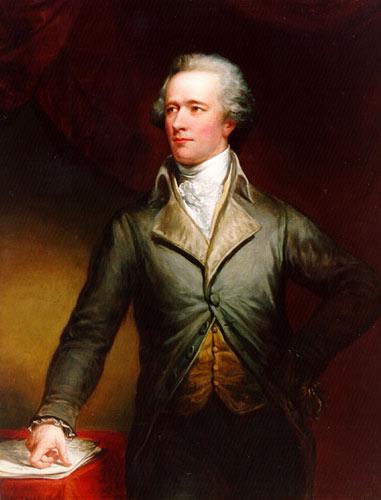
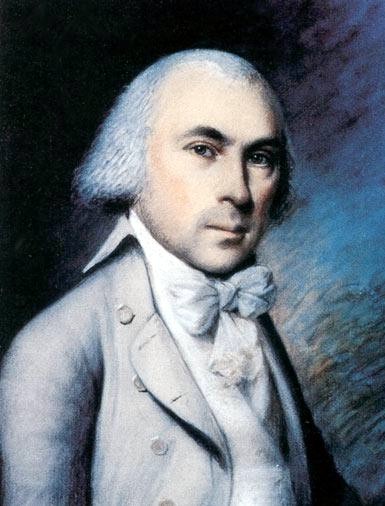
As the title indicates, the book was written in a celebratory mood toward the convention and the Founding Fathers, as they were near-universally called in 1966. It represents some kind of linguistic progress that today people know who you are talking about when you refer to them as the Founders.
Bowen was explicit about her celebratory approach in her preface:
Miracles do not occur at random, nor was it the author of this book who said there was a miracle at Philadelphia in the year 1787. George Washington said it, and James Madison. They used the word in writing to their friends: Washington to Lafayette, Madison to Thomas Jefferson.So I guess the lesson is that since politicians, in 1787 and today, could occasionally be drama queens, we might as well be, too.
Every miracle has its provenance, every miracle has been prayed for. The wine was first water in Cana; there was a wedding and a need. If miracles are men's wishes fulfilled, so with the miracle at Philadelphia. ... Trial, error, success, retreat. Plans of union and plans of government, until, four years after the Peace of Paris, Americans attempted the grand national experiment.I don't mean to imply that Bowen's book is in the vein of today's jingoistic conservative notion of American Exceptionalism, a phrase ironically made famous on the far left by Joseph Stalin and now adopted by Tea Party enthusiasts. She doesn't do that. And there's nothing wrong with writing a history of the Constitutional Convention in the vein of appreciating the pioneering liberal and democratic-republican accomplishment it was. The book is a narrative of the Convention itself designed for a popular audience, without the scholarly trappings of footnotes.
My book celebrates that experiment.
At one point, she notes the nationalist spirit of the 1780s:
The bragging and the boasting were in truth part of a young vigor, a young defiance. America must shout aloud her name, her independence. All the world must be informed of her grandiose new plans, which encompassed a continent and concerned nothing less than the equality of men. "We are making experiments," Franklin had said. (p. 165)But if anything, the "bragging and boasting" are far more prominent now. Forget the Tea Party and John Birch Society enthusiasts for American Exceptionalism. Presidents for decades now have routinely described the United States as "the greatest country in the world" or some variation of that phrase.
Although she seeks ways to show the influence of the American examples inspiring European friends of liberty and troubling the tyrants on the throne, her account also allows the reader to conclude that most Europeans, including the rulers, regarded the American states as a backwater, though an interesting and potential wealthy one. She also cautions on the accounts of European travelers who wrote contemporary accounts of the former British colonies: "A traveler sees what he wishes to see." (p. 157)
What I want to emphasize here are some of her comments on class, wealth and power. She discusses the classical liberalism of the Founders on those subjects without falling into the reductionism of Charles Beard's famous and discredited argument on how the Founders built the Constitution around their own personal financial goals, reminiscent of monopolists sitting around planning price-fixing arrangements. Bowen discusses some issues related to Beard's arguments on p. 172ff. Referring to investments of leading Convention members George Washington, Benjamin Franklin James Wilson and Robert Morris, she writes, "Yet there is no evidence to show that these men allowed their speculative interests to influence their action in the Federal Convention." She writes, "The Federal Convention was composed of propertied men; more than half owned public securities which could be expected to rise in value under a new, strong government." (p. 73) But she didn't draw the over-simplified and erroneous conclusion from that fact that Beard drew from the Convention members' personal economic situations.
As Beard's critics have noted many times over, the political ideology of the late 17th-century liberalism with which the philosopher Adam Smith, Benjamin Franklin and George Washington operated was favorable to the emerging capitalist economic order. But it wasn't directed solely at individual business schemes or solely at pecuniary interests more generally. In any case, reading the outlook of the Progressive Era or Keynesian economics or the Great Society back into the days of the Founders would be an anachronism. As Bowen describes the view of James Madison, "The right to possess property, to hold fast to it and to be represented in whatever body determined taxes: this was an essential part of liberty and of the public happiness." (p. 239)
Although, with a nod to the Founder whose nickname this blog's title honors - yes, Old Hickory counts as a Founder; he fought in the Revolutionary War - Andrew Jackson's Presidency took economic liberalism and popular democracy (for white males) to a qualitatively new level. Arthur Schlesinger, Jr. was right to see the Jacksonian era as one in which American democracy faced issues of class and democratic participation that in some ways were very similar to those confronted by Franklin Roosevelt and the New Deal. Both political projects, Jacksonian democracy and the New Deal, carried historical baggage with them, certainly including a gigantic racial blind spot in their practical understanding of democracy.
But as Bowen writes, the class composition of the Convention itself could scarcely be shared to be representative of the economic diversity of the country in 1787:
Already in this second week of meeting it was evident that whatever should divide the Convention, the division would not be on the basis of class. George Mason for all his broad acres and aristocratic bearing had faith in the people, while Roger Sherman, son of a shoemaker, had not, nor had Elbridge Gerry, the self-made merchant. Benjamin Franklin, humbly born but by all odds the man of greatest worldly experience in the country, from time to time "expressed his dislike," wrote Madison, "of every thing that tended to debase the spirit of the common people. If honesty was often the companion of wealth, and if poverty was exposed to peculiar temptation, it was not less true that the possession of property increased the desire of more property. Some of the greatest rogues he was ever acquainted with, were the richest rogues. ... This Constitution will be much read and attended to in Europe, and if it should betray a great partiality to the rich, will not only hurt us in the esteem of the most liberal and enlightened men there, but discourage the common people from removing to this Country." [my emphasis] (pp. 47-8)She doesn't give nearly as much attention to the status of Indians and slaves as we would expect from a contemporary history, though the slavery compromises (the slave trade, the 3/5's rule) form a significant element of her account of the Convention, of necessity. Women's rights are hardly a consideration in the book, nor were they at the Constitutional Convention. She devotes a few pages on the reported physical appearance of American women and table manners related to them. (pp. 165-7))
But she does note that European accounts of the general prosperity or at least lack of poverty among Americans was influenced by race: "When foreigners spoke of poverty in America they meant the poverty of white men; they were continually surprised not to find more of it." (p. 157)
And commenting on European romanticizing of the aboriginal people in the New World, she writes:
From the American Indian to the pagan hero was a nice poetic transference, but it irritated Dr. Johnson in London, who told Boswell not to "cant in defense of savages." Thomas Hobbes had seen the life of the savage as "solitary, poor, nasty, brutish, and short." Americans living on Western borders could have wished it even shorter. It is to be doubted if many eighteenth-century colonials looked on the Mohawk or the Cherokee as anything but verminous, thieving and potentially ferocious nuisances. The dusky maiden with the squash blossom in her hair ... the zephyr, the rill, the solitary glen ... only the poets of Europe could afford to indulge in such imaginings. As a rule Americans hated red Indians, wished to see them exterminated, and for the most part treated them accordingly. A William Penn, a Franklin, a Benezet, a Weiser or even a William Johnson [who saw the Indians from a less ruthless perspective] were few and far between. John Bartram the botanist, a Quaker, said the only way to deal with Indians was to "bang them stoutly." To Europe, however, the Indian had never been a "problem," but always a curiosity. (pp. 143-4)She describes the social situation of American whites this way:
The Convention of '87 discussed America not in terms of social philosophy but in relation to the country as they saw it around them. In the fields were no wretched peasant tenants, subsisting by their lord's favor. These men owned the land they cultivated. Even the mean desolate cabins of the frontier were inhabited by settlers who had gone west of their own free will. The states had indeed their poor, their ill, their aged destitute. Care of these the Convention looked on as a local responsibility; Philadelphia had her Alms House and her twenty Overseers and Guardians of the Poor. That a large part of America rested upon slavery was again no part of the Convention's immediate problem; they were met not to reform society but to create a government for society as it existed. The idle rich were as yet almost nonexistent. An American worked for what he owned; Southern planter as well as Northern merchant was aware of it. (p. 72)The absence of feudal structures like those in France or the German states of the time was an important factor in distinguishing American society and the classical liberal thought of its thinkers and philosophers (both Franklin and Jefferson can be counted as philosophers, even if the latter was used as a polemical insult against Jefferson later):
For English visitors as well as French, it was hard to understand a people who had no tradition of feudality, no loyalty of peasant to the lord who protected him, or of tenant to landlord. Not only were the Americans without tllis tradition, handed down through the generations, but they had r:o acquaintance with it. Although born as colonials they seemed to have been born free of the class above them. An English traveler, Francis Baily, put it down to the fact of easy subsistence. Because land could be acquired cheaply, men's dependence on each other was "so trifling, that the spirit of servility to those above them so prevalent in European manners is wholly unknown, and the [Americans] pass their lives without any regard to the smiles or frowns of men in power." Thomas Cooper said much the same thing. There were no Americans of great rank, Cooper wrote, nor many of great riches. "Nor have the rich the power of oppressing the less rich, for poverty such as in Great Britain is almost unknown." T he very term farmer, said Cooper, had in America another meaning. Whereas in England it signified a tenant, paying heavy rent to some lord and occupying an inferior rank in life, here m Pennsylvania a farmer was a landowner, equal to any man in the state? "having a voice in the appointment of h1s leg1sators, and a fair chance ... of becoming one himself. In fact, nine-tenths of the legislators of America are farmers." (pp. 155-6)Bower's description is somewhat of an exaggeration. The mercantilist companies that Britain used to settle large portions of North America exercised land ownership and rule by private owners that was not wholly unlike feudal arrangements. Even whites citizens of Britain had been subject to indentured servitude. One of the legal actions pursued by the new states after the American Revolution was the abolition of feudal-aristocratic laws like primogeniture and entail. So there were at least remnants of feudal elements in the American economy and society of that time.
And she does describe some of the manifestations of poverty in the 1780s, though she doesn't appear troubled by its seeming incompatibility with her general assessment of poverty:
Filth was thrown into the streets, wells contaminated by backyard privies. Typhoid, malaria, smallpox, the bloody flux, the putrid sore throat (diphtheria) swept through the cities in summer like a scythe. Rickets and scurvy abounded. These were the good old days, so often lamented by moderns of a romantic turn. One is almost surprised that fifty-five delegates survived to maturity and the Federal Convention. A Virginia innkeeper and his wife told [François Jean de Beauvoir, Marquis de] Chastellux [1734-1788] they had had fourteen children, none of whom lived to the age of two. (p. 163)The classical liberalism that dominated the thought of the Convention was dubious of the poor and didn't completely reject the idea of making the franchise dependent on some property qualification:
Madison told his colleagues that the United States had not reached the stage of a closely peopled Europe, where the propertied and the poor were natural enemies. In 1787, as today, the propertied men of America differed greatly in their sympathy with the common people. To George Washington, Captain Shays and his men [in Shay's Rebellion of 1786-7, a catalyzing even for the Constitutional Convention]had been "misled"; to Jefferson they signified a healthy republic; to Gerry they were incorrigible and should be allowed no part in government.Bowen gives an accessible description of how the Founders tended to view property in a democratic-republican political order:
For the next three months the Convention would debate, argue, quarrel over the nature and disposition of the American people, the "people at large." What did the people desire in the way of government, what did they deserve, what would they accept? Most of the state constitutions required their voters to own property, in sums ranging from twenty pounds in New York to sixty pounds in Massachusetts, though Pennsylvania, Delaware and New Hampshire had already come out for free elections. In the end the Convention left this matter to the state legislatures. [my emphasis] (p. 73)
Elbridge Gerry agreed with Pinckney that the state legislatures should appoint the representatives in Congress. But could not the people first nominate certain persons from their districts, who in turn would do the final appointing? Like Pinckney, Gerry did not wish to rob the people of all confidence in the new government; they must be permitted to feel their share in it. In England, said Gerry, the people were in danger of losing their liberty because so few had the right of suffrage. Whereas here, the danger was the opposite. Look what was happening in Massachusetts! "The worst men get into the legislature ... Men of indigence, ignorance and baseness spare no pains, however dirty, to carry their point ... "She writes that James Madison argued for an even less representative version of the national Senate than the one on which the Convention settled:
To most of the Convention there is no doubt that indigence was a bad word. We meet the phrases often: persons without property or character . . . men without character and fortune ... "The most dangerous influence," said John Dickinson, "of those multitudes without property and without principle with which our country, like all others, will soon abound." If today the words are shocking, almost absurd, it is well to recall that they were spoken in an America where, for a few generations at least, poverty very likely did mean sloth and idleness. America in 1787 was three-quarters agricultural, with land abundant and labor scarce. The poorest immigrant could soon earn enough to buy his plot of ground, cut down his trees, erect his log hut and plant his seeds against the coming spring. When those who governed Revolutionary America spoke of "men of the better sort," or "men of the baser sort," they did not refer to men with character or without it but to men with property or without it. And if the word property today carries sinister philosophical overtones, to the Convention of 1787 it had an altogether different connotation: property was not a privilege of the higher orders but a right which a man would fight to defend. Men had indeed died to defend it in the war with England. (p. 70) [emphasis in original]
Looking ahead, Madison saw a United States peopled very differently from the year 1787. "In framing a system which we wish to last for ages," he told the Convention, "we should not lose sight of the changes which ages will produce. An increase of population will of necessity increase the proportion of those who will labor under all the hardships of life, and secretly sigh for a more equal distribution of its blessings. These may in time outnumber those who are placed above the feelings of indigence." Power, Madison said, could then slide into the hands of the numerous poor rather than the few rich. Symptoms of a leveling spirit had already appeared in certain quarters. How was this danger to be guarded against "on republican principles"? A body in the government (a senate) "sufficiently respectable for its wisdom and virtue," with an elective term of nine years to render it stable- surely this would provide a safeguard for liberty.The population of the US and its great cities did, of course, growth considerably in the succeeding centuries. Bowen notes that in 1787, the population of New York city was 30 thousand, a modest-sized suburbs population in 2013.
Present-day readers may be a trifle dashed to find the Father of our Constitution urging, in effect, that the American rich put up barriers against the American poor, who with power in their hands could be dangerous. By symptoms of a leveling spirit, Madison meant riots and rowdyism under Pennsylvania's popular government, the recent unrest in Maryland, the agrarian paper money troubles of Rhode Island, and of course Shays's Rebellion. Yet it is unfair to make judgment in terms of today. In the year 1787 the Convention's proposals were essentially new, untried. And before they could take effect the people must approve them. (pp. 122-3)
Despite her statement "it is unfair to make judgment in terms of today," Bowen also had some Cold War considerations contemporary to 1966 in mind:
A rebellion which is launched over the principle of no taxation without representation ts hardly a proletarian revolution. Nor does a proletarian revolution include a Commander in Chief from whose tongue there trips easily the phrase "men of reflection, principles and property." Here was no quarrel, as today, between human nights and property rights. Madison said that "a man has property in his opinions and the free communication of them, he has property in the free use of his faculties, in the safety and liberty of his person." To the eighteenth century, property gave a man a stake in society, made him responsible, worthy of a vote and a voice m government. (p. 71)It's not entirely clear what argument she was addressing here, since neither orthodox Soviet-line Communists nor anyone else of whom I'm aware was arguing that the American Revolution had been a "proletarian revolution." Certainly if one means by "proletarian" an industrial working class, such a thing scarcely existed in the United States at the time of the Revolutionary War.
It's also worth noting that the defenders of Jim Crow segregation laws often argued on the basis of "property rights" that the law shouldn't compel businesses to not discrimination against customers or employees on the basis of race. Advocates of civil rights at the time argued that human rights in that case trumped any consideration of property rights.
Bowen's statements quoted above that the Convention members "discussed America not in terms of social philosophy" and that "they were met not to reform society but to create a government for society as it existed" are potentially misleading in this context. There is a long-running and continuing controversy among historians as to whether the American Revolution was a conservative revolution or if it also involved elements of social revolution, i.e., changes the social and economic positions of portions of the population. It shouldn't surprise anyone to learn that this consideration also had implications for Cold War ideology. I won't go into that question any further here other than to say that it seems to me that the weight of the argument is on the side of historians like Gordon Wood who contend that there was indeed a social revolution involved in the American Revolution and not "just" a War of Independence from Britain.
Tags: american revolution, liberalism, us constitution